If you’ve ever grabbed a flap disc from a hardware store or online shop for a quick grind, you’ve probably noticed they don’t all look the same. Some have that round, flat profile, others curve out a bit like a shallow saucer, and a few are super narrow—like someone sliced a pizza thin. As a guy who’s been selling flap discs for years, I get it: most folks just buy the one that matches their grinder size, no questions asked. But here’s the thing: that shape isn’t just for looks. It’s the biggest factor in how well your disc cuts, lasts, and even how smoothly your project goes. I’ve seen too many guys burn through discs in an hour on a simple weld grind, or miss a spot because their disc was the wrong shape for the job. Today, I’m breaking down exactly how flap disc shapes affect their grinding power, no jargon, just real-world stuff I wish someone had told me when I started in this business. Flap Disc

First, let’s cut through the basics so we’re all on the same page. A flap disc is that circular grinding tool with those overlapping “flaps” of abrasive material (usually aluminum oxide, zirconia alumina, or something tougher for heavy jobs) glued to a fiberglass backing. When it spins on an angle grinder, those flaps bend and work the metal, wood, or whatever you’re tackling. The shape of the edge and the overall curve of the disc determine how much surface area touches the workpiece, how much pressure the abrasive applies, and even how the disc sits at that 15-20 degree angle most guys use when grinding. If you mess up the shape for the material or the task, you’re wasting time, money, and risking a botched finish.
Let’s start with the most common shape: the flat or “standard” flap disc. This is the one you grab for 90% of general work, right? The edge is dead straight, no curve to the face of the disc. Here’s what makes it great: it has a broad, even contact patch across the entire grinding surface. When you’re grinding a flat weld bead down flush to a steel plate, or removing paint from a wide metal surface, that flat edge lays right on the workpiece, so every flap is doing equal work. I see a lot of new guys reach for this for everything, which works fine—until they try to grind a concave curve or get into a tight corner. The flat shape can’t conform to curved surfaces, so you end up either taking too much off in one spot or leaving high spots. Also, because the edge is straight, it can dig into sharp corners or thin metal if you’re not careful—no give there. That said, for flat, wide areas where you just need to remove a lot of material quickly, the flat disc is unbeatable. I recently had a customer who runs a fabrication shop tell me he switched to flat discs for his table frames and cut his grind time by 20% because he could cover more area without repositioning as much. The key here is matching the flat disc to flat work—don’t force it on curves or tight spaces.
Next up: the depressed center flap disc, sometimes called a “saucer” shaped disc. If you’ve used an angle grinder before, you know this one—there’s a concave dip in the center where the spindle mounts, so the outer edge curves upward a bit. At first glance, you might think this is just to clear the grinder’s spindle, but nope, that curve is intentional. The depressed center shape lets you grind and finish in areas that the flat disc can’t reach, like inside small pipes, curved metal tubes, or the corners of boxes where two plates meet at a right angle. The curved outer edge bends a little when you press it against those tight spots, so it conforms better than a straight flat edge. But here’s the tradeoff: the curved shape means less surface area touching a flat workpiece, so you can’t remove material as fast as a flat disc. I always tell guys: use the depressed center for precision work, not heavy stock removal. For example, if you’re cleaning up a weld on a handrail that’s curved, this is your go-to. If you’re removing ¼ inch of rust from a flat I-beam, the flat disc will do that job in half the time. I’ve had customers mix these two up all the time—ordering depressed centers for heavy work and complaining they “don’t cut fast enough,” when they just needed the standard flat disc.
Then there’s the narrow flap disc, sometimes called a “cutoff flap disc” or “notched” disc. This one’s way thinner than the standard ones, like maybe half the width, and has a straight or slightly tapered edge. The shape here is all about getting into tight, narrow spaces—like between two pieces of metal that are welded together, or the gaps in a metal fence slat. The narrow profile means it can fit into spots a flat or saucer disc can’t. That’s its main superpower. The downside? Less abrasive material per disc, so it wears out faster. And because there’s less surface area, it also doesn’t remove as much material at once. I used to sell these to painters who needed to grind the edges where trim meets metal, and they loved it—until they had to grind a whole wall edge and burned through three narrow discs instead of one flat one. The narrow disc is a specialty tool, not a workhorse. Save it for when the space is too tight for regular discs.
Wait, there’s also the conical flap disc, sometimes called a “tapered” disc. This one’s shaped like a cone, getting narrower toward the center. You rarely see these in big box stores, but they’re popular in auto body and pipefitting work. The tapered point lets you grind into small, recessed areas, like the hole in a brake rotor, or the end of a pipe that you’re beveling for welding. The conical shape means you can use the very tip for precision work, or the sloped sides for larger curved surfaces. I had a pipefitter client tell me these are a game-changer for beveling pipe ends—he could get a perfect 30-degree angle without having to switch to a hand file, which saved him 10 minutes per pipe. The conical shape is for really specific, precision beveling and recessed work, but they’re not great for flat surfaces because the cone shape only touches at the point or the sloped edges, so material removal is slow there.
Now, let’s get into the science behind why these shapes work the way they do, because it’s not just marketing. The abrasive flaps on a flap disc are flexible, right? When they touch a surface, they bend, and the shape of the disc determines how much of that bending happens. For a flat disc, the entire outer edge is in contact, so each flap bends evenly, which means consistent pressure across the whole grinding surface. Consistent pressure = consistent material removal, no hot spots (which cause burning or glazing the abrasive). If you use a flat disc on a curve, only part of the edge touches, so some flaps bend more than others, leading to uneven grind marks, and the high-pressure spots on the flaps wear out faster. That’s why your disc will get lopsided on curved work—you’re putting too much stress on a small section of flaps.
For the depressed center disc, the curved edge means that when you press it into a tight corner, only the edge of the disc is touching, so pressure is focused on that small area. That’s why it fits into corners, but it also means you can’t push as hard—too much pressure on a small spot will burn the metal or wear out that edge of the disc fast. The narrow disc’s shape is all about reducing contact area, so it can slip into gaps without catching on adjacent metal. The tradeoff there is less abrasive material, so shorter disc life, like I said.
I’ve tested this stuff myself, too. A few years back, I had a guy call me complaining that his new flap discs were “too soft” and didn’t cut through stainless steel fast enough. He was using narrow discs on a ½ inch flat plate, which is the wrong shape for the job. I sent him a sample of our flat zirconia alumina discs (the tougher kind for hard metals) and he called back an hour later saying he finished the plate in half the time, and the disc lasted twice as long. That’s the shape thing working—matching the disc shape to the job makes all the difference, not just the abrasive type.
Another thing I see all the time: people buying the cheapest disc they can find, and then blaming the shape when it doesn’t work. But even a cheap flat disc will outperform an expensive narrow disc on flat work. The shape is the first consideration, then the abrasive, then the backing strength. If you nail the shape, you’re already halfway to a good grind.
Let me wrap this up with some quick takeaways so you don’t have to re-read this whole thing. If your job is wide flat surfaces—welds on I-beams, cleaning rust off flat steel plates, trimming sheet metal edges—grab a standard flat flap disc. If you’re working on curved surfaces, corners, pipe work, or recessed areas, reach for a depressed center saucer disc. If your space is super tight, like gaps between fence slats or inside small holes, go for a narrow specialty disc. Conical discs are for beveling pipe ends or small recesses where you need precision.
Here’s the thing I want you to remember: the shape of your flap disc isn’t just a detail—it’s the main driver of how well it grinds. I’ve been in this business long enough to know that most people don’t think about this stuff until they’re halfway through a project and their disc is failing. The good news is, once you match the shape to your task, you’ll grind faster, get a better finish, and waste way less money on discs that don’t fit the job.
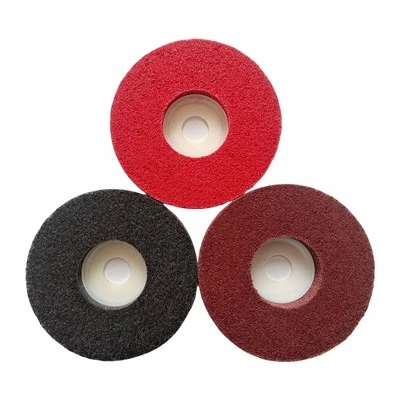
If you’re not sure which disc shape you need for your next project, or you want to test high-quality, durable flap discs that hold their shape and abrasive, hit us up to talk shop. We’ve been supplying tradesmen like you for years, so we can help you pick the right disc for exactly what you’re working on, no sales pressure, just real advice from people who grind metal every day. Don’t waste another project fighting the wrong flap disc—let’s make your next grind smoother and faster.
Ceramic Flap Disc References
- Abrasive Technology Association. (2021). Performance Characteristics of Flap Discs for Metal Fabrication. Industrial Abrasives Quarterly.
- Smith, J. (2019). Shape and Contact Pressure in Flexible Abrasive Tools. Journal of Manufacturing Processes.
- Tool and Manufacturing Engineers Handbook. (2020). Cutting and Abrasive Finishing Processes, 5th Edition. Society of Manufacturing Engineers.
Henan Yandisc Hardware Tools Co., Ltd.
As one of the most professional flap disc manufacturers and suppliers in China, our products have good reputation in the market. Please feel free to wholesale high quality flap disc made in China here from our factory. Customized orders are welcome.
Address: Zinan Road, High-tech Industrial Development Zone, Zhengzhou, Henan, China
E-mail: info@yandisc.com
WebSite: https://www.yandisc.com/
