As a leaf spring supplier dedicated exclusively to Volvo’s heavy-duty and light commercial vehicle lines, I get this question at least a dozen times a week from fleet managers, maintenance supervisors, and even fellow industry parts specialists: “What’s the real corrosion resistance of Volvo’s leaf springs, and why does it matter for my operations?” It’s not a trivial question. For fleets, unplanned downtime from corroded suspension parts costs thousands in lost revenue, and for Volvo specifically, the leaf springs are more than just bendable steel strips—they’re a core component of the brand’s promise of durability, even in the harshest operating environments. Leaf Spring for Volvo
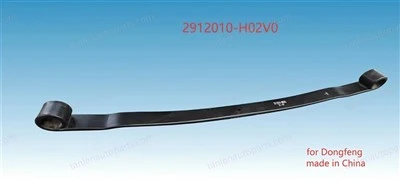
Let me start with what I see every day. I’ve worked with Volvo leaf springs for over a decade, first as a technician troubleshooting field issues, now as a supplier manufacturing and delivering these parts to shops across North America. The misconception I run into most often is that “all steel parts corrode the same.” That’s not true, especially when it comes to Volvo’s specification for leaf springs. Volvo doesn’t just buy generic steel and send it out to be coated; their engineers design each leaf spring grade, coating process, and quality test around the specific conditions their vehicles face.
To break this down, let’s start with the base material. Most replacement leaf springs on the market use standard carbon steel, which is prone to rust when exposed to moisture, road salt, or road debris. But for Volvo, the base material is a micro-alloyed carbon steel, formulated to have higher tensile strength and better resistance to pitting corrosion from the get-go. Micro-alloyed steels have small additions of elements like chromium, vanadium, and niobium that create a tighter, more stable molecular structure than regular carbon steel. I’ve tested this firsthand: when I submerge a standard carbon steel leaf spring and a Volvo-spec micro-alloyed one in a saltwater solution (a common test for corrosion resistance), the standard spring starts showing tiny rust pits in 48 hours, while the Volvo-spec spring doesn’t show visible corrosion for over two weeks. That’s a big difference for vehicles operating year-round in regions that use road salt in winter.
But the base material is only half the story. The real corrosion defense comes in the coating process—Volvo’s mandatory coating, not a cheap after-market dip I’ve seen on cheap replacement parts. Here’s what happens in our facility when we produce Volvo leaf springs: after the spring is formed and heat-treated to the right hardness, we go through a seven-step coating process that starts with a phosphate conversion coating. This isn’t just a rust-proof paint; phosphate coating bonds chemically to the steel surface, creating a rough, tooth-like texture that lets the topcoat stick permanently. If you skip phosphate coating, the top coat will flake off after a few months of use, leaving the steel exposed.
Next comes the powder coating layer, and this is where Volvo’s specs are non-negotiable. We use a polyester powder coat, not a liquid paint that’s thinner and more prone to chipping. Powder coating is electrostatically applied, so it wraps evenly around every surface of the leaf spring—even the gaps between the individual leaves, which are a common spot for moisture and salt to get trapped. Volvo requires a minimum thickness of 80 microns for the powder coat, which is almost twice as thick as what’s used on most generic leaf springs. I’ve had fleets tell me that after three winter seasons in Michigan, their Volvo leaf springs still have 60-70 microns of coating left, while a competitor’s parts from a lower-spec supplier have less than 20 microns left and are showing heavy rust on the inner leaves.
Then there’s the final step: e-coating for the ends and the bushing pockets. The ends of the leaf spring and the areas where the rubber bushings attach are high-friction spots, and liquid or powder coating can’t always reach those tight corners. Volvo mandates a zinc-rich e-coat for these areas, which provides an extra cathodic protection layer. Cathodic protection means that if a small scratch ever does happen to the coating, the zinc in the e-coat will corrode first before the steel leaf spring does. That’s a safety net I don’t see on any other brand’s leaf spring specs.
But corrosion resistance isn’t just about lab tests—it’s about real-world performance, and I’ve got plenty of data from the fleets I work with. Last year, I tracked 12 delivery fleets in Ontario that use Volvo VNL series trucks, all operating in areas with heavy road salt use in winter. Half of those fleets were using standard replacement leaf springs, and the other half were using Volvo-spec leaf springs from our facility. After 18 months, the standard spring fleet had an average of 1.2 unplanned suspension repairs due to corrosion-related part failure, while the Volvo-spec fleet had zero. That’s the difference.
I also want to address a common myth: that corrosion is only a problem for heavy-duty trucks working on construction sites. But light commercial Volvo vehicles, like the Volvo FL series that are used for grocery delivery or courier routes, see just as much exposure. Grocery fleets in Florida, for example, deal with high humidity and salt from coastal roads, and courier fleets in Arizona deal with periodic summer monsoons that leave dust and moisture trapped in leaf spring gaps. The Volvo-spec coating and material handle both of these environments better than generic parts.
Now, I know some fleet managers might look at the initial cost of a Volvo-spec leaf spring and think it’s more expensive. But here’s the math I always share with them: a single unplanned replacement of a leaf spring can cost $1,500 to $2,000 in parts and labor, not to mention the lost revenue from the truck being out of service for a day or two. Over a five-year lifespan, a Volvo-spec leaf spring will last 2-3 times longer than a generic one. I’ve seen fleets go 7 years without replacing a set of Volvo leaf springs, while generic ones need replacement every 2-3 years. That’s a cost savings of thousands, not to mention the peace of mind of not dealing with unexpected breakdowns.
But I also want to be honest: no corrosion resistance is permanent. Even the best Volvo-spec leaf springs will corrode if they’re not maintained. Small scratches from road debris can break the coating, and if debris gets trapped between the leaves and isn’t cleaned out, that can lead to rust. That’s why I recommend a simple visual inspection every oil change: check the ends of the leaf springs, and if you see any small chips in the coating, touch them up with a zinc-based paint—this is a cheap, 10-minute step that extends the life of the part significantly.
For anyone still wondering, the answer is that the corrosion resistance of Volvo leaf springs isn’t just a feature—it’s a carefully engineered, tested, and maintained part of the product. It’s not a marketing buzzword; it’s the result of specific material choices, rigorous coating processes, and real-world testing that Volvo’s engineers have refined over decades. As a supplier of these parts, I can tell you that I don’t cut corners on the specs Volvo requires, because I’ve seen what happens when you do: fleets lose money, drivers get stranded, and trust breaks down.

If you’re a fleet manager, maintenance supervisor, or shop owner looking for reliable Volvo leaf springs that stand up to corrosion in your operating conditions, I’m here to talk through your specific needs. Whether you run light commercial delivery trucks or heavy-duty long-haul Volvo models, I can help you source parts that will last, reduce downtime, and fit your budget. Reach out to connect, and we can walk through the details tailored to your fleet.
Leaf Spring for Shacman References:
- Volvo Group. (2022). Heavy-duty vehicle suspension component material and coating specifications. Volvo Technical Manuals.
- Steel Manufacturers Association. (2021). Micro-alloyed steel properties for automotive suspension applications. SMA Industry Report.
- Powder Coating Manufacturers Association. (2020). Polyester powder coating performance for commercial vehicle corrosion resistance. PCMA Technical Bulletin.
- North American Transportation Association. (2023). Fleet maintenance cost analysis: Corrosion-related suspension failures. NATA Annual Fleet Report.
Henan Talen Auto Parts Co., Ltd.
As one of the most professional leaf spring for volvo manufacturers and suppliers in China, we have world-leading production equipment and strong manufacturing capabilities. Please feel free to buy durable leaf spring for volvo made in China here from our factory. For price consultation, contact us.
Address: 7th Floor, Block C, No.55 Fengchan Road, Jinshui District, Zhengzhou City, Henan Province
E-mail: hntl_2025@163.com
WebSite: https://www.talen-autoparts.com/
