When I first started building wastewater recycling systems 12 years ago, I thought the biggest challenge would be the engineering: how to filter out microplastics, break down pharmaceuticals, and make the water clean enough to drink. What I didn’t expect was how often we’d sit across from city managers, factory owners, or agricultural leaders and talk about something far more complicated than membrane technology: ethics. Wastewater Recycling System

Last month, a small municipal client in the Midwest turned us down. They loved our system’s ability to cut their annual freshwater bills by 40%, it fit perfectly under their treatment plant expansion budget, and their engineers said the water quality was better than the lake they were currently pulling from. But their city council voted it down after a public hearing where residents brought up questions we hadn’t prepared for: “Is this safe?”, “Who owns this water?”, “What happens if the system breaks and we get sick?”. That experience stuck with me because it was a reminder that wastewater recycling isn’t just about pipes and filters—it’s about people, trust, and the hard ethical lines that shape whether a system works long term, not just on paper.
The first ethical consideration that comes up in every project is transparency around safety. For decades, wastewater recycling has had to fight a stigma—“toilet to tap” jokes still come up in public meetings, even when science says modern systems produce water cleaner than most bottled water. As a supplier, our job isn’t just to run lab tests and share data; it’s to explain risk in plain language, not jargon. Early in our work, we’d present reports with terms like “reverse osmosis rejection rate” and “disinfection byproduct formation potential” and watch audience’s eyes glaze over. Now, we bring tangible proof: test strips that show lead levels, sample bottles with side-by-side water from the lake and our system, and stories of communities that have used our systems for 5+ years without a single health incident. But transparency isn’t just about sharing good results. It’s also about admitting when we don’t have answers. A factory client once asked what would happen to their recycling system during a 3-day power outage. We didn’t have a complete answer back then, so we didn’t give them one. Instead, we brought in our engineering team a week later to walk them through backup generators, manual valve protocols, and water storage tanks—no fine print, no overpromising. That honesty built more trust than any sales pitch ever could.
Next is equity. Wastewater recycling systems don’t exist in a vacuum. We’ve worked with large corporate clients that use our systems to cut their own water costs by 50%—and that’s a win, right? But we had one conversation with a food processing plant owner who wanted to install a system that would let them pull less water from the local river, which they shared with a small town downstream. We realized quickly that if we built that system without accounting for the town’s water needs, it would leave them with less freshwater to drink and grow crops with. So we redesigned the system to prioritize the town’s required allocation first, and only recycle the excess. That’s not just good business—it’s ethical. Too often, wastewater systems are seen as a “solution” that benefits big businesses or wealthy cities first, leaving low-income communities to deal with the risk of new infrastructure without the rewards. As suppliers, we have a responsibility to ask: who is this system serving? Are we building it so that vulnerable groups don’t bear the brunt of any mistakes? We recently partnered with a rural agricultural community that struggled to afford freshwater for their crops in drought years. Our system recycles runoff from their processing plants and the community’s homes, and we structured the cost so that small family farms pay 20% less per gallon than large commercial operations. That’s equity in action, and it’s something we bring to every project now, not an afterthought.
Then there’s the question of ownership and control. When a city or factory installs our wastewater recycling system, who owns the water? Who decides how much to treat, when to release it, or how to use it? Early on, we built a system for a city that we thought included full operational support for our team. But six months after installation, the city’s new mayor decided to cut costs and switch to a cheaper maintenance provider, which led to a spike in microplastic levels in the recycled water. We stepped in to fix the problem, but the damage was done— that city never used our system again. That taught us that control can’t be one-sided. Now, we build our contracts so that the client retains final decision-making power over all operational changes, but we also include mandatory ongoing training for their staff, so they have the expertise to make good choices. We also put limits on our own ability to modify the system without their written approval, no fine print. This goes deeper than contracts, too. We work with communities to define what “recycled water” means to them. Some cities want their recycled water used for irrigation only; others are comfortable using it for drinking. We never push a use case that a community isn’t aligned on, even if it would mean a smaller project for us. Trust around control is non-negotiable, and once that’s broken, it’s almost impossible to fix.
Another ethical line is environmental impact beyond the water itself. Wastewater recycling systems are often sold as a way to help the planet, but we’ve seen projects that cut a factory’s water use only to increase their energy consumption by 30%, because recycling water requires a lot of electricity for filtration and treatment. A few years ago, we worked on a system for a textile factory that was pushing to meet a corporate sustainability goal of “zero freshwater use”. We designed a state-of-the-art system that hit that goal, but when we dug into the numbers, the factory’s carbon footprint would go up by 25% because of the energy needed to run the reverse osmosis units. That didn’t feel right. Instead, we worked with them to adjust their production process to use less water in the first place, then sized our recycling system to match that reduced need. The result was a 70% cut in freshwater use and only a 10% increase in energy use— a better environmental outcome all around. We also prioritize systems that use renewable energy where possible. We recently partnered with a solar installer to add solar panels to every system we build, at no extra cost to the client (we structure the cost into a longer-term service plan). That way, we’re not trading water scarcity for carbon emissions— we’re solving both problems at once. We also make sure that any byproducts from the treatment process, like solid sludge, are disposed of responsibly, not dumped in landfills or local waterways. We work with agricultural partners to turn that sludge into fertilizer, closing the loop instead of creating more waste.
Risk mitigation is another critical ethical consideration, and it’s one that we take very seriously as suppliers. Wastewater recycling is a closed loop, but nothing is perfect. What happens if a pipe breaks, or a treatment unit fails, or a staff member makes a mistake? We’ve had a scare with a system for a housing development a few years ago: a faulty sensor meant that the disinfection step didn’t run for 4 hours, when a heavy rainstorm pushed extra contaminants into the system. We caught it early, thanks to our real-time monitoring software, and shut the system down before any water entered the development’s taps. But it was a wake-up call. Now, all our systems have redundant sensors, automatic shutoff protocols, and 24/7 monitoring from our in-house team. We also carry insurance that covers any water quality issues, no loopholes. We never cut corners on backup systems, even when a client pushes for a smaller, cheaper setup. The cost of a mistake isn’t just financial—it’s trust, and we’ve seen how a single safety incident can set back wastewater recycling in an entire region for years.
At the end of the day, wastewater recycling is a tool. It can solve water scarcity, cut costs, reduce strain on freshwater ecosystems—but it’s only as good as the ethics that guide its design and implementation. That Midwest city that turned us down a year ago? We kept in touch. We started hosting community workshops in their town, bringing in independent scientists to explain water quality, and walking residents through how our system works, step by step. Last month, they reached out to us— they’re not just considering our system now, they’re asking us to lead a community task force that will include residents, city council members, and local farmers to shape every detail of the project. That’s the work that matters. We’re not just selling equipment— we’re building solutions that people trust, that benefit everyone, that align with both science and what’s right.
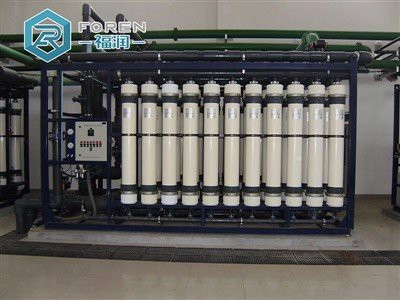
If you’re looking for a wastewater recycling partner that prioritizes transparency, equity, and ethical design, we’d welcome the chance to discuss your project and how we can help.
Seawater Desalination Plant References
- U.S. Environmental Protection Agency. (2021). Guidelines for Water Reuse.
- World Health Organization. (2017). Safety of Wastewater Use in Agriculture.
- National Research Council. (2012). Water Reuse: Potential for Expanding the Nation’s Water Supply Through Reclamation and Recycling.
- American Water Works Association. (2020). Ethical Principles for Water Utility Practice.
- United Nations Water. (2022). The Ethics of Water Recycling: Equity, Access, and Governance.
Qingzhou Foren Water Treatment Equipment Co., Ltd.
As one of the most professional wastewater recycling system manufacturers and suppliers in China, we offer a wide range of products with superior quality. Please feel free to buy customized wastewater recycling system made in China here from our factory. Contact us for quotation.
Address: No.999 Haidai North Road, Economic development Zone, Qingzhou City, Shandong Province
E-mail: alice@forenwater.com
WebSite: https://www.forenwater.com/
