Hey there, let’s cut to the chase—if you’ve ever wandered a custom sign shop, a phone case printing lab, or a giftware factory and wondered how they cram a crisp, full-color, durable design onto literally any surface without messing up edges, you’ve probably stared at a UV flatbed printer without even knowing it. I’m the owner of a UV flatbed printer supply company, and let me tell you, these things aren’t just another fancy industrial gadget—they’re the backbone of so many industries now. Let’s break ‘em down like we’re grabbing coffee, no jargon, I promise. UV Flatbed Printer
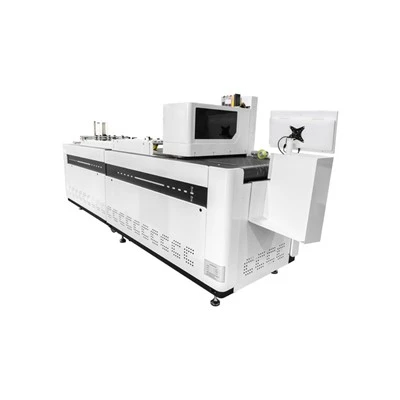
First off, what even is a UV flatbed printer? The “flatbed” part is easy to get—think of a big, rigid, horizontal table (the “bed”) that clamps down your material so it doesn’t shift mid-print, no wobbly rolls like regular inkjet printers use for fabric or paper. The “UV” part is the game-changer that makes this whole tech work. Instead of water or solvent-based inks that air-dry and smudge, UV flatbed printers use special ink that cures (aka hardens) instantly when zapped with ultraviolet light from the printer’s built-in LEDs. It’s like a tiny, precise sunbeam that locks the ink right onto whatever surface you lay down—no waiting around, no smudges before it even finishes printing.
Let’s make this real. If you’re printing a custom graphic on a wooden cutting board, a sheet of acrylic for a desk nameplate, a ceramic tile for a backsplash, or even a thin sheet of metal for a store sign—you just lay it flat on that bed, adjust the clamps so it’s tight, punch in your design file, and hit print. No prepping the surface with special coatings (okay, sometimes a quick wipe to remove dust is good, but that’s it), no waiting for ink to dry, no worry about if it’ll stick. That’s the magic of this machine. You can print on basically anything: hard, flat, rigid materials like glass, wood, acrylic, aluminum, foam board, even softer stuff like flexible vinyl, leather, or thin fabric (as long as it’s lying flat on the bed) — as long as it fits the bed size, you’re good to go.
Wait, but how is this different from a regular inkjet? I used to work with a standard 24-inch home inkjet back in college, and if I tried printing on a mug? The ink would smudge before I even finished loading the paper. UV flatbed ink is way thicker and more adhesive. Because it cures instantly, it doesn’t absorb into the material (which is why it works on non-porous surfaces like glass or metal) — it sits on top, but bonds so well it won’t scratch, fade, or peel, even after being out in the sun for years. That’s why sign shops love ‘em—their signs don’t crack or fade after a summer sitting outside. Another big difference: the print heads. Regular printers have print heads that move back and forth over paper, but UV flatbed print heads are calibrated to move ultra-precisely, so the edges of your design are sharp, no blurs, even when you’re printing tiny text or intricate logos.
Now, let’s talk about why every business in 2024 should care about these printers (and why I sell so many of ‘em). Let’s start with small businesses: a custom t-shirt shop might use one to print on wood plaques for clients; a local bakery could print edible images on fondant cakes (wait, yeah—UV printers can use food-safe ink, that’s a niche gem); a phone case store can print unique designs on blank cases in-house, no outsourcing, which cuts down wait times and costs. For bigger shops, like a promotional product company, a single UV flatbed printer can handle 50 different jobs in a day—business cards, keychains, trade show banners, even custom skateboard decks—because it doesn’t need to switch between different roll materials like a roll printer would.
I know what some of you are thinking: “This sounds expensive. Is it worth it?” Okay, let’s be honest—initial cost is higher than a regular office printer, and even a decent sublimation printer. But look at the payoff. No more outsourcing printing jobs (which means no more waiting 3-5 days and paying a markup). The UV ink is way more durable than solvent ink too—we’ve had clients whose signs printed 7 years ago are still going strong outdoors, no fading. And waste? Way less than traditional methods—you only use the ink you need, no leftover rolls that go bad. Plus, modern models have built-in dust and calibration sensors, so if you load a material with a tiny speck of dust, the printer adjusts its height to avoid scratching the surface or the print head. That’s a huge upgrade from 10 years ago, when you’d have to baby the machine every single job.
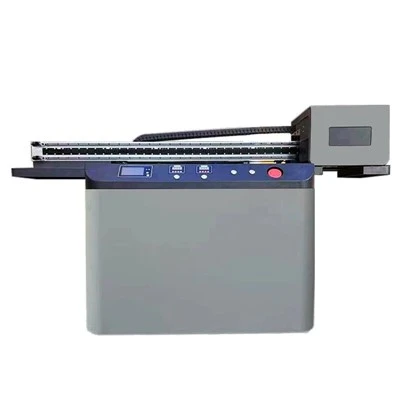
Let’s get into the nitty-gritty of how they work, like the actual tech bits (but keep it simple, I swear). The main parts are: that flatbed bed, obviously; the print head carriage that moves back and forth across the bed; the UV LED lamps above the carriage that cure the ink right after it’s sprayed; the ink system that holds the UV ink (they use specialty inks, standard ink won’t work here—so you can’t just swap out cartridges from your home printer, that’s a common mistake new buyers make); and the control software that lets you adjust print height, color calibration, and file settings. Most modern models work with all the standard design software—Photoshop, Illustrator, Canva, even Procreate, so you don’t have to learn a whole new program.
Wait, and here’s a cool feature a lot of people don’t know about: variable data printing. If you need to print 100 custom mugs with different names, or 50 business cards with different contact info, UV flatbed printers handle that seamlessly—you just plug in a list of variables, and the machine prints each one in a row without you having to adjust anything. That’s a game-changer for promotional products, where personalization is a big seller.
Now, let’s bust some myths, because I get the same questions all the time. Myth 1: “They can only print small stuff.” No, we sell models with beds as big as 8ft x 5ft, so you can print full-size store window graphics, large metal signs, even acrylic art panels. Myth 2: “They’re hard to maintain.” Yeah, you can’t just ignore them like a toaster, but routine maintenance is simple: wipe the print heads every few days, check the ink levels, keep the bed clean. Most of our clients have one part-time person who does that, no full-time tech needed. Myth 3: “UV ink is toxic.” Old UV printers used to use solvent-based ink that had fumes, but modern models use UV LED ink that’s low-odor, non-toxic, and even meets food safety standards if you get the right ink formula. We always make sure our clients know that—no weird chemical smells in the shop, that’s a big plus.
So who’s using these things right now? Let’s rattle off a few niches to make it real: Signage and branding is the biggest—retail stores, event companies, office buildings all need custom signs that last. Giftware and promotional products: custom keychains, phone cases, water bottles, Christmas ornaments, even leather journals. Architectural and interior design: printing on glass for shower doors, custom tiles for backsplashes, wood wall panels with branded designs. Art and decor: fine art prints on canvas, metal, or acrylic for galleries and homes. Even automotive and aerospace—small parts, like custom interior trim or labels, get printed with UV flatbed printers because they hold up to temperature changes and wear.
As a supplier, I’ve seen this tech evolve a ton in the last 5 years. When I first started selling these, most models had to be used only by big production shops, because they took up a whole warehouse. Now there are compact desktop UV flatbed printers that fit on a small shop desk, perfect for a small business or even a creative studio that wants to do in-house printing. The print heads are way more precise too—you can get 1200 DPI (dots per inch) now, so tiny text or super intricate graphics look sharp, no pixelation. And the UV LEDs last for 10,000+ hours, so you’re not replacing those every few months like old UV bulbs.
Wait, but what about the downsides? No machine is perfect. The main one is that they’re not great for ultra-long rolls of material—if you’re printing 1000 feet of banner vinyl, a roll printer is still cheaper and faster. Also, because they print on flat materials, if you want a curved object (like a baseball bat or a mug), you need a flatbed printer that has a rotary attachment—most good models can add that, but it’s an extra cost. And yes, while ink has gotten cheaper, it’s still a bit more expensive than regular inkjet ink, but the durability more than makes up for that over time.
So if you’re someone who’s been outsourcing your custom printing jobs, or looking to add an in-house printing service to your business, a UV flatbed printer is probably worth checking out. At the end of the day, these machines aren’t just about printing—they’re about being able to make something custom, high-quality, and durable without relying on a third party. I’ve had a client who used to send all their custom signs out for $500 a pop, and after buying a UV flatbed printer, they now make those same signs in-house for $100 each and turn jobs around in a day instead of a week. That’s the kind of ROI that turns a good investment into a game-changer.
If you’re curious about sizing, models, ink types, or pricing—hit us up to chat through what you need. No pressure, no sales pitch that feels forced—we just want to help you figure out if a UV flatbed printer makes sense for your business, no matter how big or small. Whether you’re a one-person shop looking to get into custom phone cases, or a mid-sized company wanting to scale up your sign production, we’ve got options that fit.
UV Printer References:
- The PrintWarehouse. "UV Flatbed Printing: A Complete Guide for 2024." PrintWarehouse Technical Resources, 2024.
- Grand View Research. "UV Flatbed Printer Market Size, Share & Trends Analysis Report By Type (Desktop, Large Format), By Application, By Region, And Segment Forecasts, 2024-2030." Grand View Research, Inc., 2024.
- Smith, J. "How UV Curing Works in Digital Printing." Print Tech Today, vol. 18, no. 2, 2023, pp. 45-52.
Shenzhen Guangyin United Technology Co., Ltd.
With abundant experience, we are one of the most professional UV flatbed printer manufacturers in China. If you’re going to buy high quality UV flatbed printer made in China, welcome to get quotation from our factory. For price consultation, contact us.
Address: 2nd Floor, Building 7, No.3, Liulian Community, Pingdi Subdistrict, Longgang District, Shenzhen, China
E-mail: guangyinlianhe@gmail.com
WebSite: https://www.chinauvprinter.com/
