If you’ve ever stood in front of a distribution cabinet in a factory floor, office building, or residential complex, you might have glanced at the metal enclosure holding rows of circuit breakers, busbars, and terminal blocks and thought it’s just a “box with switches.” As a distribution cabinet supplier, I can tell you that’s far from the truth: the distribution board inside that enclosure is the backbone of safe, reliable power distribution—and getting its design right separates a cabinet that runs smoothly for 10+ years from one that causes downtime, safety hazards, and costly reworks. Distribution Cabinet
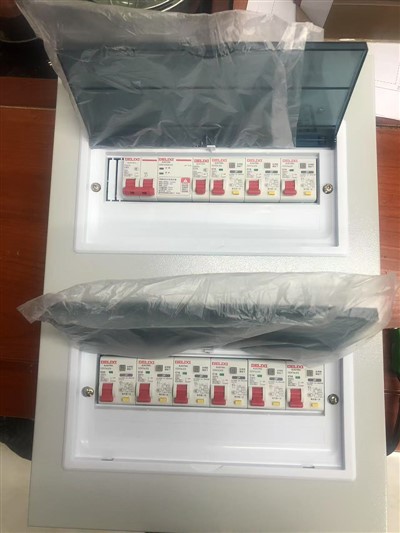
When I first started in this business 12 years ago, I made a rookie mistake. A client asked for a 400A distribution board for a new manufacturing plant, and I just pulled a off-the-shelf layout from our catalog, slapped it in a standard cabinet, and shipped it. Two weeks later, they called in a panic: the board was overheating during peak production trips, and breakers were misfiring. Turns out, I’d overlooked how the plant’s heavy machinery generated non-linear loads that threw off the board’s thermal balance. That day, I learned: good distribution board design isn’t one-size-fits-all—it’s a tailored, step-by-step process that blends electrical code compliance, load analysis, physical layout, and future flexibility. Today, that’s exactly what I walk my team through, and what I share here to help anyone specifying or designing these critical components.
The first, and most non-negotiable, step before laying out a single component is to nail the load analysis. You can’t design a distribution board without knowing exactly how much power it needs to carry, where it’s going, and what kind of loads it’s serving. Too many suppliers skip this, leading to undersized components or unnecessary overengineering that raises costs. Here’s how we do it at our shop: first, we collect every load from the project’s electrical schematic—lights, HVAC, motor drives, outlets, industrial equipment, whatever is connected. For each load, we note its amperage, voltage (120V, 240V, 480V, or 600V), and load type: linear (like incandescent lights, resistive heaters) or non-linear (like LED drivers, variable frequency drives, VFDs, computer servers). Non-linear loads are a big deal because they produce harmonic currents that add extra heat to busbars and breakers, so we size components 15-20% larger for these loads to avoid overheating.
We also account for diversity factor—because not all loads run at full capacity at the same time. For example, a retail store has 20 outlets, but only 10 are typically in use at once; a factory might run all motors during a shift but turn off half during maintenance. Instead of adding every load’s amperage directly, we multiply by a diversity factor (usually 0.7 to 0.8 for commercial, 0.6 to 0.7 for industrial) to get the total calculated load. Last year, we worked on a 10-story office building: their initial schematic added up to 600A total, but diversity factor knocked it down to 420A, which let us spec a smaller, lighter board that saved the client 15% on cabinet costs without risking undercapacity.
Once we have the calculated load, the next step is sizing the core components: busbars, circuit breakers, and the enclosure itself. Busbars are the conductive strips that carry power from the main incoming breaker to all the branch circuits—they’re the veins of the distribution board, and undersized busbars are the number one cause of overheating failures. We size busbars based on the calculated load, plus a 25% safety margin for future expansions. For a 400A main load, we use 6 AWG copper busbars (or aluminum, if the client requests it—aluminum is lighter and cheaper, but requires tighter torque on connections to prevent corrosion). We also use stranded busbars for non-linear load applications, since they handle harmonic currents better than solid busbars.
Circuit breakers are next. The main incoming breaker’s amp rating has to match the busbar size, and each branch breaker has to be sized to the circuit it’s protecting. We follow NEC (National Electrical Code) standards, but we also add our own rule: for branch circuits feeding non-linear loads, we specify breakers with harmonic-rated interrupting capacities. Standard breakers can trip prematurely with harmonic currents, so harmonic-rated ones are designed to handle that extra load without issue. We also make sure there’s enough space between breakers and busbars to allow for proper airflow—overcrowding a cabinet traps heat, so we never cram more than 80% of the cabinet’s internal space with components.
The physical layout of the distribution board is where form meets function, and this is where bad designs get dangerous. The first rule here is separation: power circuits and control circuits can’t share the same wiring channels, because electrical interference from power lines can mess up control signals for motors or lighting systems. We also separate neutral and ground buses—neutral carries the return current, and ground is for safety, and they should only connect at the main incoming breaker, not anywhere else on the board. That prevents ground loop currents, which cause extra heat and can damage sensitive equipment.
We also organize the board by function: main breaker first, then distribution blocks, then branch breakers, with space labeled clearly next to each component. Every breaker has a legible label that says what circuit it feeds—“Office Floor 3 Lights” instead of “Circuit 7”—so maintenance crews don’t have to guess which breaker to turn off for a repair. We also leave 20-25% empty breaker slots in every board, even if the initial design doesn’t need them. Industrial clients love this for adding new machinery later; commercial clients use them for new office expansions. I can’t tell you how many times a client has come back a year after installation, needing to add a new server rack, and our pre-planned empty slots saved them from having to tear out the entire board.
Then there’s thermal management, which is often overlooked but critical. Even with correctly sized components, poor airflow can lead to overheating. For all our distribution boards, we add ventilation slots at the top and bottom of the enclosure to create natural convection—hot air rises, so it exits through the top, and cool air comes in from the bottom. For boards in enclosed rooms or high-temperature environments (like a factory floor with no air conditioning), we install thermostatic fans that turn on automatically when internal temperatures hit 40°C, and shut off when it cools down. We also test every board before it leaves our shop: we run it at 110% of its calculated load for 4 hours, checking internal temperatures with thermal cameras to make sure no part exceeds 60°C—NEC’s maximum safe operating temperature for electrical components.
Safety is non-negotiable in every design, and we build that in at every step. First, all connections are torque-tested: we use a calibrated torque wrench on every busbar and breaker connection to make sure they’re tight enough to prevent arcing, but not so tight that we damage the wiring or components. Arcing is one of the biggest risks in distribution boards, and loose connections are the leading cause. We also add arc fault circuit interrupters (AFCI) for residential and commercial boards, and ground fault circuit interrupters (GFCI) for circuits near water or outdoor areas, as required by code. For industrial boards with high fault currents, we spec breakers with high interrupting ratings, so they can safely trip during a short circuit without failing. We also make sure the enclosure is IP-rated: IP20 for indoor cabinets to prevent accidental contact with live parts, IP54 for outdoor or dusty environments to keep out dust and moisture.
Another thing we prioritize is future flexibility. We’ve all seen cabinets installed in 2020 that are already obsolete in 2024, because the electrical system can’t adapt to new equipment. That’s why we design every distribution board with modular components: breakers, busbars, and terminal blocks that can be added or swapped without reconfiguring the entire board. For example, if a client needs to add a new 20A circuit next year, they don’t have to replace the main board—they just slide in a new breaker in the empty slot and connect it to a spare busbar tap. We also include a main neutral terminal block that’s sized for the maximum possible future load, so the client doesn’t have to upgrade that later.
Last year, we worked on a small manufacturing plant that was expanding its production line, and their old cabinet had a custom board that couldn’t be modified. They ended up having to replace the entire cabinet, which cost them $8,000 in downtime and materials. Our design for their new cabinet included 25% extra breaker slots and modular busbars, and a year later, when they added their new line, they had the new circuit up and running in 2 hours with no extra cost. That’s the value of good design—it saves money long after the initial installation.
I want to be clear: there’s no such thing as a “perfect” distribution board, because every project has unique needs. A board for a quiet office building will have different requirements than one for a heavy manufacturing plant, and a residential board is nothing like an industrial one. The key is to work closely with your supplier to communicate your specific needs—not just the total amperage, but the environment, future expansion plans, and types of loads you’ll be running.
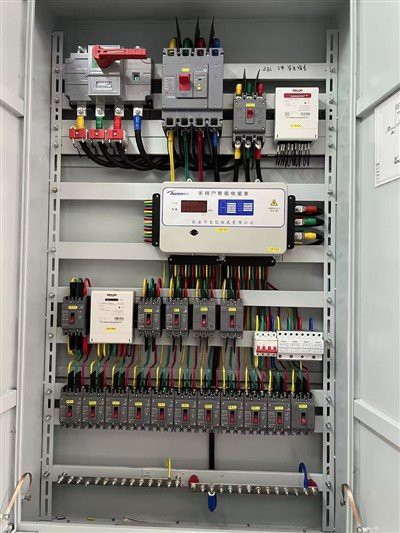
If you’re planning a new installation, upgrading an existing cabinet, or just need a custom distribution board that fits your exact requirements, our team has years of experience designing for commercial, industrial, and residential projects. We don’t just sell cabinets—we work with you every step of the way, from load analysis to final testing, to make sure your distribution board is safe, reliable, and built to last. Get in touch with us today to discuss your project, and let’s build a solution that works for you.
Distribution Cabinet References
National Electrical Code (NEC). 2023 Edition. National Fire Protection Association.
IEC 60439-1: Low-voltage switchgear and controlgear assemblies – Part 1: Type-tested and partially type-tested assemblies. International Electrotechnical Commission.
Goldenberg, M. (2021). Electrical Distribution Design and Estimating. CRC Press.
Anhui Nanxian Electric Co., Ltd.
With abundant experience, we are one of the most professional distribution cabinet manufacturers and suppliers in China. We warmly welcome you to buy advanced distribution cabinet for sale here and get quotation from our factory. All customized products are with high quality and low price.
Address: Factory Unit 03-2, Building 21, Feidong Yinfeng Industrial Park Co., Ltd., Northeast Corner of Manquan Road and Changle Road, Hefei Circular Economy Demonstration Park, Feidong County, Hefei City, Anhui Province.
E-mail: 541580567@qq.com
WebSite: https://www.nxelepower.com/
