Humidity is a prevalent environmental factor that can have far – reaching implications for various electrical components, and high voltage interlock connectors are no exception. As a dedicated high voltage interlock connector supplier, I’ve witnessed firsthand how humidity can interact with these critical connectors and impact their performance. In this blog, I aim to delve deep into the science behind humidity’s influence on high voltage interlock connectors and offer insights on how to mitigate potential issues. High Voltage Interlock Connector

Understanding High Voltage Interlock Connectors
Before we explore the effects of humidity, it’s essential to understand the role and structure of high voltage interlock connectors. These connectors are crucial in high – voltage electrical systems, such as those found in electric vehicles, renewable energy systems, and industrial machinery. Their primary function is to ensure a safe and reliable electrical connection while also providing a safety mechanism. When the connector is disengaged, the high – voltage circuit is interrupted, preventing potential electrical hazards.
High voltage interlock connectors are typically made up of conductive pins or contacts, an insulating housing, and sometimes additional locking or sealing mechanisms. The conductive contacts are responsible for carrying the high – voltage current, while the insulating housing prevents electrical leakage and protects the contacts from external factors.
The Impact of Humidity on High Voltage Interlock Connectors
1. Electrical Insulation Degradation
One of the most significant effects of humidity on high voltage interlock connectors is the degradation of electrical insulation. Moisture in the air can be absorbed by the insulating materials used in the connector housing. Most common insulating materials, such as plastics and rubbers, have some degree of water absorption capacity. When these materials absorb water, their dielectric properties change.
The dielectric constant, which is a measure of a material’s ability to store electrical energy in an electric field, increases with moisture absorption. This can lead to an increase in electrical leakage current. In high – voltage applications, even a small increase in leakage current can be a concern as it can cause power losses, overheating, and potentially lead to electrical breakdown.
Electrical breakdown occurs when the insulating material can no longer withstand the applied voltage, and a path of conducting plasma forms through the insulator. This can result in a short – circuit, damaging the connector and other components in the electrical system.
2. Corrosion of Conductive Contacts
Humidity also promotes corrosion of the conductive contacts within the high voltage interlock connector. The presence of moisture creates an electrolyte environment, which can accelerate the oxidation process of metals. In high – voltage connectors, the contacts are often made of copper or copper – alloy materials, which are prone to oxidation in the presence of oxygen and moisture.
Corrosion on the contacts increases their electrical resistance. As the resistance increases, more power is dissipated in the form of heat when current flows through the contacts. This can lead to overheating, which further exacerbates the corrosion process and can eventually cause the contacts to fail. A failed contact can result in an open circuit, interrupting the electrical connection and potentially causing system malfunctions.
3. Mechanical Integrity Issues
Moisture can also affect the mechanical integrity of the high voltage interlock connector. The expansion and contraction of materials due to changes in humidity levels can cause stress on the connector components. For example, if the insulating housing absorbs water and swells, it can put pressure on the conductive contacts, potentially causing them to misalign.
In addition, the locking and sealing mechanisms of the connector can be affected by humidity. Seals may lose their elasticity over time when exposed to high humidity, leading to a compromised seal. This allows more moisture to enter the connector, further exacerbating the problems mentioned above. A loose or damaged locking mechanism can also result in an unreliable connection, increasing the risk of electrical disconnection.
4. Impact on Signal Transmission
In some high voltage interlock connectors, there may also be signal transmission lines for monitoring the connection status or other system parameters. Humidity can interfere with the signal transmission in these lines. The presence of moisture can introduce noise into the signal, leading to inaccurate readings or false alarms. This can be particularly problematic in safety – critical applications where reliable signal transmission is essential.
Mitigating the Effects of Humidity
1. Material Selection
As a high voltage interlock connector supplier, we pay close attention to material selection. We use insulating materials with low water absorption rates and high resistance to electrical degradation. For example, some engineering plastics, such as polyphenylene sulfide (PPS) and polyetheretherketone (PEEK), have excellent moisture resistance and dielectric properties.
For the conductive contacts, we often use materials with high corrosion resistance, such as gold – plated copper. Gold plating provides a protective layer that prevents direct contact between the copper and the surrounding environment, reducing the risk of corrosion.
2. Sealing and Encapsulation
Proper sealing is crucial to protect high voltage interlock connectors from humidity. We design our connectors with high – quality seals, such as O – rings or gaskets, to prevent moisture from entering the connector housing. In some cases, we also offer encapsulated connectors, where the entire connector assembly is enclosed in a protective resin or potting compound. This provides an additional layer of protection against moisture and other environmental factors.
3. Environmental Testing
To ensure the reliability of our high voltage interlock connectors in humid environments, we conduct extensive environmental testing. This includes tests such as humidity chambers, where the connectors are exposed to different levels of humidity and temperature for an extended period. By monitoring the performance of the connectors during these tests, we can identify any potential issues and make necessary design improvements.
4. Maintenance and Monitoring
Regular maintenance and monitoring can also help mitigate the effects of humidity on high voltage interlock connectors. End – users can be advised to inspect the connectors periodically for signs of corrosion, moisture ingress, or mechanical damage. In addition, some advanced connectors can be equipped with sensors to monitor parameters such as humidity, temperature, and electrical resistance in real – time. This allows for early detection of potential problems and timely maintenance.
Conclusion
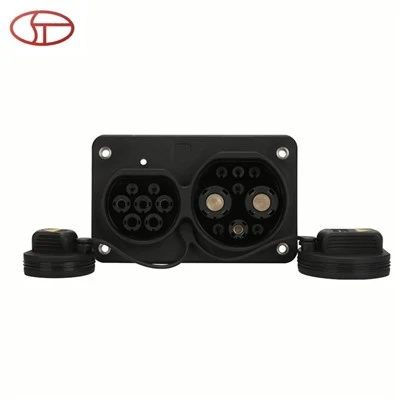
As a high voltage interlock connector supplier, I understand the critical role that these connectors play in high – voltage electrical systems. Humidity can have a significant impact on their performance, from electrical insulation degradation and corrosion to mechanical integrity issues and signal transmission problems. However, through careful material selection, proper sealing, environmental testing, and maintenance, we can minimize these effects and ensure the reliable operation of our connectors in various environmental conditions.
EV Charging Connector If you are in the market for high – quality high voltage interlock connectors that are designed to withstand the challenges of humidity and other environmental factors, I encourage you to reach out to us. We have a team of experts ready to discuss your specific requirements and provide you with the best – suited solutions for your applications. Contact us to start a procurement discussion and take the first step towards a reliable and safe high – voltage electrical system.
References
- Grover, Philip. "Principles of Electrical Insulation for Power Systems". IEEE Press, 2014.
- Poltronieri, Carlos. "Corrosion of Metals: Mechanisms, Protection and Monitoring". Elsevier, 2017.
- Rakowski, Ryszard. "Environmental Testing of Electronic Components". Butterworth – Heinemann, 2012.
Zhejiang Shitu Electric Co., Ltd.
As one of the most professional high voltage interlock connector manufacturers and suppliers in China, we offer a wide range of products with superior quality. Please feel free to buy custom made high voltage interlock connector from our factory. Good service and reasonable price are available.
Address: 1st and 2nd floors of Building C, Yueshang Entrepreneurship Park, Yueqing Economic Development Zone
E-mail: stdq@cnshitu.cn
WebSite: https://www.shitu-connect.com/
