If you’ve ever dug into power electronics, chances are you’ve heard the term “Cool-MOSFET” thrown around. And if you’re someone who’s been shopping around for reliable power components, you’ve probably also wondered: what makes these things so special, and where do they even get used beyond just lab datasheets? As someone who’s been supplying Cool-MOSFETs for nearly a decade—working with everyone from tiny startup inventors to big-name electronics manufacturers—I get that confusion all the time. A lot of folks see them as just another MOSFET, but trust me, they’re the unsung heroes keeping so many of the gadgets and systems you rely on every day running smoothly. Let’s break down the real, practical applications of Cool-MOSFETs, no jargon overload, and why they matter more than you might think. Cool-MOSFETs
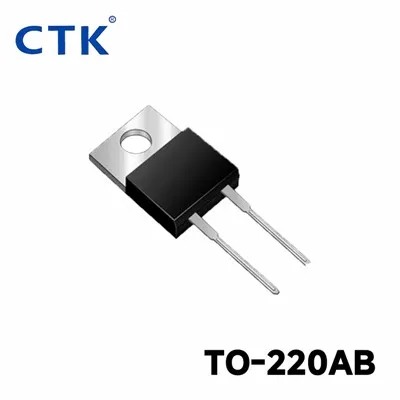
First off, let’s get the basics right for anyone new to this. Regular MOSFETs (Metal-Oxide-Semiconductor Field-Effect Transistors) are used to switch or amplify electrical signals, but they’ve always had a flaw: when you turn them on, they waste a ton of energy as heat. That heat not only hurts efficiency, it makes systems bulkier because you need big heat sinks to cool them down. Cool-MOSFETs, which were developed back in the 90s by some smart folks at Infineon, fixed that with a special silicon structure that cuts down on that on-resistance (that’s the Rds(on) number you see on datasheets, in case you’ve ever glanced at one and ignored it). Lower Rds(on) means way less heat, better efficiency, and smaller overall designs. That’s the core superpower driving every application, so keep that in mind as we go.
Let’s start with the most ubiquitous application these days: consumer electronics. You probably interact with Cool-MOSFETs multiple times before you even finish your morning coffee. Take your smartphone, for example. Back in the day, phone chargers were big, bulky, and took forever to top up your battery. Now, we’ve got fast chargers that slip into a pocket, and the inside of those chargers is packed with Cool-MOSFETs. They switch the AC power from your wall outlet into the low-voltage DC power your phone needs, and because they’re so efficient, the charger doesn’t get hot to the touch even when it’s pumping out 25W or 65W of power. I remember when we started supplying Cool-MOSFETs to a small wireless charger maker a few years back—they were using regular MOSFETs before, and their prototype chargers were so hot you could barely hold them. Swapping in Cool-MOSFETs cut their operating temperature by nearly 15 degrees, and let them shrink the charger’s size by 30% without sacrificing speed. That’s the kind of win that makes consumer products feel seamless.
Laptops are another big one. Think about how many ports and power modes a modern laptop has: it goes from sipping power when you’re just browsing the web to cranking out 100W for gaming or video editing. Cool-MOSFETs manage that power transition perfectly. They sit in the laptop’s power management circuit, switching power on and off at super high speeds (like millions of times per second) without wasting energy as heat. That means your laptop battery lasts longer on a charge, and the charger doesn’t turn into a space heater when you’re pushing it hard. We’ve also had a lot of customers making wireless earbuds use Cool-MOSFETs to manage the small battery charging inside the case—again, efficiency is key here, because you don’t want to waste a single mAh of battery life.
Moving beyond personal gadgets, Cool-MOSFETs are game-changers in renewable energy systems, which is something I’m really passionate about. The push for solar panels, wind turbines, and energy storage is only growing, and every system in these spaces relies on efficient power conversion. For solar panels, the inverter is the heart of the system—it takes the DC power the panels generate and turns it into AC power you can use in your home or feed back into the grid. If that inverter is inefficient, you lose a ton of energy before it even gets to your outlets. Cool-MOSFETs are used in those inverters because their low Rds(on) cuts those conversion losses by like 2-3% compared to regular MOSFETs. For a residential solar system, that might mean an extra 50-100 kWh of energy per year—enough to power a fridge for a whole month. Multiply that across thousands of solar systems, and that’s massive energy savings.
We also work with a lot of wind turbine manufacturers. Those big turbines have power converters that adjust the speed of the generator to match wind conditions, and Cool-MOSFETs are ideal here because they handle high voltages and high switching speeds. Plus, they can operate reliably in the tough, variable conditions wind turbines face—extreme cold, high humidity, lots of vibration. I’ve had a customer tell me their turbine’s inverter ran for 7 years straight with Cool-MOSFETs, barely needing any maintenance, compared to 2 years with their old MOSFETs. That uptime is huge for renewable energy, where downtime means lost revenue and missed energy targets.
Another area I see a lot of demand for is electric vehicles (EVs) and charging infrastructure. Let’s be real, EVs are the future, and Cool-MOSFETs are a big part of why they’re getting better. There are two main places they show up in EVs: the on-board charger (OBC) and the powertrain inverter. The OBC charges the car’s battery from a plug-in source, and again, efficiency is key here—lower loss means faster charging, less heat, and smaller, lighter chargers that don’t add unnecessary weight to the car (which kills range). The powertrain inverter takes DC power from the battery and turns it into AC power to drive the electric motor. Cool-MOSFETs here reduce the energy lost during that conversion, which directly translates to longer range. We supply a lot of smaller EV startups that are trying to beat big automakers on range and efficiency—swapping in our Cool-MOSFETs for their initial prototypes helped some of them boost range by 8-10% without changing the battery size. That’s a huge selling point when every mile counts for consumers.
Then there’s the charging infrastructure for EVs, like DC fast chargers that can add 200 miles of range in 15 minutes. Those chargers pump out hundreds of kilowatts of power, and they need components that can handle that without overheating. Cool-MOSFETs are perfect here because they can handle high currents and switch fast, and their low loss means the charger doesn’t need giant, bulky cooling systems that make the chargers expensive to install and maintain. A lot of charging station operators we work with say that using Cool-MOSFETs cut their maintenance costs by almost half because they don’t have to replace failed parts from overheating as often. That’s a win for them, and a win for drivers who don’t have to wait weeks for a broken charger to get fixed.
I’d be remiss if I didn’t mention industrial applications, because that’s where a lot of the heavy lifting happens. Industrial motor drives, for example, power everything from factory conveyor belts to robot arms to HVAC systems in large warehouses. Traditional motor drives use a lot of energy, and a big part of that loss is in the power switching components. Cool-MOSFETs cut that loss, making industrial operations more energy-efficient, which is huge for factories that run 24/7. We’ve had a customer who runs a manufacturing plant for packaged goods—after switching their motor drives to Cool-MOSFETs, they reduced their monthly power bill by over $12,000. That’s not chump change for a small to mid-sized factory.
Then there’s data centers, which are constantly growing as we use more cloud services, streaming, and AI. Data centers use tons of power, mostly for servers and cooling, and any small efficiency gain adds up to big savings. Power supplies for servers rely on Cool-MOSFETs to convert high-voltage AC power from the grid into the low-voltage DC power servers need. Because they’re so efficient, the power supplies don’t get hot, which reduces the load on the data center’s cooling systems. A hyperscale data center might have hundreds of thousands of servers, so even a 1% efficiency gain means saving millions of dollars a year in power and cooling costs. We supply a lot of power supply makers that work with these data centers, and they tell us that Cool-MOSFETs are now a non-negotiable component for new server designs—customers won’t even consider older, less efficient components anymore.
Wait, let’s also talk about automotive accessories, just to round things out. Things like LED headlights, infotainment systems, and driver assistance features (ADAS) all need efficient power management. ADAS systems rely on sensors, cameras, and processing units that need consistent, reliable power, and Cool-MOSFETs regulate that power to avoid voltage spikes that could damage components. They also work in things like electric power steering and brake systems, where reliability is non-negotiable—no one wants a power steering failure because of a component that overheats.
Now, I know a lot of people ask me: is there a limit to where Cool-MOSFETs can go? Sure, for ultra-high voltage applications like long-distance power transmission, silicon carbide (SiC) MOSFETs are starting to take over, but for most consumer, automotive, renewable, and industrial uses, Cool-MOSFETs are still the go-to because they’re more cost-effective and easier to integrate into existing designs. They’re also getting better every year—new generations of Cool-MOSFETs have even lower Rds(on), higher switching speeds, and better thermal performance, so their applications are only expanding.
As a supplier, I’ve seen firsthand how these components turn good products into great ones. The startup that makes those tiny fast chargers? They couldn’t have done it without Cool-MOSFETs. The solar installer who cuts their customers’ energy bills? That’s Cool-MOSFETs at work. The EV that gets 300 miles on a charge instead of 270? That’s them too.
If you’re an engineer designing a new product, a procurement manager looking to cut power costs, or a small business owner trying to build a more efficient system, Cool-MOSFETs are probably something you should be looking into. If you want to talk about how they can work for your specific application, feel free to reach out—we work with all kinds of clients, from prototype stages to full-scale production, and we can help you pick the right Cool-MOSFET model for your needs. No sales pressure, just straight talk about what works.
Fast Recovery Diode References
- Baliga, B. J. (2008). Power semiconductor devices: Volume 2: Applications. John Wiley & Sons.
- Infineon Technologies AG. (2022). CoolMOS Technology: The Foundation for High-Efficiency Power Conversion.
- Energy Star. (2021). Reducing Energy Loss in Power Electronics for Consumer and Industrial Applications.
- Electric Power Research Institute (EPRI). (2020). The Role of Wide-Bandgap Semiconductors in Renewable Energy and EV Infrastructure.
Tongke Electronic Co., Ltd
Tongke Electronic Co., Ltd. is one of the most experienced cool-mosfets manufacturers and suppliers in China, featured by quality products and low price. Please rest assured to wholesale advanced cool-mosfets made in China here from our factory. Contact us for pricelist.
Address: No.3,Chayuan Rd, Street 3, AilingKan, Dalingshan, Dongguan, Guangdong, China.
E-mail: jack@ctk-elec.com
WebSite: https://www.ctkchip.com/
