If you’ve ever spent time sourcing flat springs for industrial, automotive, medical, or consumer electronics applications, you know that selecting the right heat treatment is just as critical as choosing the right material or spring geometry. As a flat spring supplier who’s worked with hundreds of clients over 12 years, I’ve seen far too many projects derail because a team picked a heat treatment based on a generic guide online or a one-size-fits-all suggestion, rather than aligning it to the spring’s specific purpose, load requirements, and operating environment. Flat springs aren’t just small metal strips that bend and return to shape—they’re precision components that need to hold consistent force over millions of cycles, resist corrosion, or withstand extreme temperatures, and heat treatment is the process that makes that possible. Flat Springs
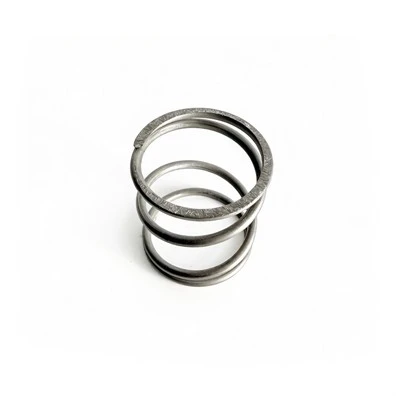
Let’s start with the basics, because too often I get calls from engineers who confuse material specs with heat treatment specs. A flat spring’s core material is only half the story. For example, 301 stainless steel has excellent ductility, but if you don’t heat treat it correctly, it will take a permanent set the first time you apply load. Similarly, music wire is strong, but improper heat treatment can leave it brittle enough to snap during assembly. Heat treatment alters the microstructure of the metal, adjusting hardness, tensile strength, fatigue resistance, and corrosion performance—all properties that directly translate to how your flat spring performs in the real world.
The first step in selecting the right heat treatment is mapping out your spring’s non-negotiable requirements. I always tell new clients to create a simple checklist before diving into heat treatment options, because every requirement narrows down the choices quickly. Let’s break down the most common criteria I see:
First, cycle life. How many times will your flat spring bend, compress, or extend during its lifetime? For a automotive door latch, that might be 100,000 cycles. For a disposable medical device like an insulin pen trigger, it could be 10,000 cycles. For a aerospace component, it might be 10 million cycles. If your spring only needs to function a few dozen times, a lower hardness, more ductile heat treatment will work fine. But if you need millions of cycles, you need a heat treatment that optimizes fatigue strength. Fatigue failure in flat springs usually starts at microcracks on the surface, so processes that reduce surface stress or introduce compressive residual stress are key here. That’s a big part of why I often recommend shot peening paired with primary heat treatment for high-cycle applications—shot peening bombards the surface with small particles to create a compressed layer that prevents cracks from growing, extending cycle life by 200% or more in many cases.
Second, load and deflection requirements. Flat springs are designed to exert a specific amount of force at a specific deflection. If your heat treatment makes the spring too hard, it might exert too much force when bent, or not deflect at all. If it’s too soft, it might not hold its force over time and develop permanent set. Permanent set is when a spring doesn’t return to its original shape after load is removed—this is a make-or-break issue for almost every application. For example, a flat spring used to hold a battery in a consumer phone can’t develop permanent set after just a few months, because the battery would rattle or fail to make contact. So for applications that require consistent load over time, we use a stress-relief heat treatment paired with a controlled aging process, which tempers the metal to lock in its elasticity without making it brittle.
Third, operating environment. Will your spring be exposed to moisture, salt, chemicals, or extreme temperatures? If it’s used in a marine application, corrosion resistance is non-negotiable, and not all heat treatments boost corrosion resistance equally. For example, if you’re working with 17-7 PH stainless steel, solution annealing and precipitation hardening (PH) will give you higher strength than stress relieving, but it also maintains the chromium-rich surface layer that prevents rust, making it ideal for outdoor or wet environments. For springs used in high-temperature settings, like under the hood of a car, you need a heat treatment that prevents thermal relaxation—when metal loses its strength at high temperatures, causing the spring’s force to drop over time. For these, we use a aging heat treatment that creates fine precipitates in the metal microstructure that resist thermal softening, so the spring holds its force even at 250°C or higher. For cold environments, the opposite is a consideration: some heat treatments can make steel brittle at sub-zero temperatures, so we avoid overly hard, un-tempered processes for springs used in refrigeration units or Arctic equipment.
Fourth, dimensional stability. Flat springs are often custom-cut or stamped to very tight tolerances—sometimes within 0.001 inches. Some heat treatments involve heating the metal to high temperatures, which can cause warping or scaling, throwing off those tolerances. For high-tolerance applications like medical device triggers or semiconductor equipment components, we use low-temperature heat treatments (under 200°C) that change the microstructure without distorting the part. We also use fixture-based heat treatment, where we hold the spring in its exact shape during heating and cooling, so it doesn’t bend or warp. This is critical because re-stamping or re-machining a heat-treated flat spring is almost impossible—heat treatment locks the metal’s shape, so you have to get it right before the process.
Now, let’s talk about the most common heat treatments we use for flat springs, and which applications they work best for. I don’t list these in order of preference, because the best process depends entirely on the criteria above.
The first is stress relieving. This is the most basic heat treatment, and it’s perfect for low-cycle, general-purpose flat springs. It involves heating the metal to just below its critical transformation temperature (usually 200-400°C), holding it for a set time, then cooling slowly. Stress relieving removes the internal stresses that are created during stamping or cutting, which prevents permanent set and warping. We typically use this for springs that need to bend a small number of times (under 10,000 cycles) and don’t face extreme environments. The downside is that it doesn’t significantly boost hardness or fatigue resistance, so it’s not for high-performance applications.
Next is tempering, often paired with quenching for high-carbon steels like music wire or carbon steel strip. Quenching involves heating the metal above its critical temperature, then rapidly cooling it in water or oil, which makes it extremely hard—but also very brittle. Tempering is then heating the quenched metal to a lower temperature to reduce brittleness while keeping most of the hardness. For flat springs that need consistent load and moderate cycle life (10,000 to 100,000 cycles), this is a great option. For example, a flat spring used in a microwave door latch gets cycled a few times a day, and tempering gives it the right balance of hardness and toughness to last for the life of the appliance. We usually adjust the tempering temperature depending on the desired hardness: lower tempering temperature = harder, higher force, more brittle; higher tempering temperature = softer, more flexible, less force.
Then there’s precipitation hardening (PH), which is the gold standard for high-performance stainless steel flat springs. Alloys like 17-7 PH, 15-5 PH, and 301 stainless steel can be heat treated this way, and it’s a two-step process: first, solution annealing, where the metal is heated to a high temperature to dissolve alloy elements, then quenched to lock them in a solid solution. Then comes aging, where the metal is heated to a moderate temperature (400-500°C) to let those alloy elements form tiny, uniform precipitates that strengthen the metal. PH heat treatment gives flat springs excellent strength, fatigue resistance, and corrosion resistance—perfect for aerospace, medical, and automotive high-cycle applications (1 million+ cycles). For example, a flat spring used in a jet engine fuel control system needs to hold consistent force for years at high temperatures, and PH heat treatment ensures it doesn’t relax or corrode.
Shot peening is not a standalone heat treatment, but it’s an essential secondary process for almost all high-performance flat springs. As I mentioned earlier, it introduces compressive residual stress on the surface, which counteracts the tensile stress that causes fatigue cracks. We always pair shot peening with primary heat treatment for springs that need to last 100,000 cycles or more. I’ve had clients come to me with flat springs that failed after 50,000 cycles, only to find that skipping shot peening was the issue—adding it boosted cycle life to over 2 million cycles without changing the spring’s geometry at all.
Now, let’s talk about common mistakes I see clients make when selecting heat treatment. The biggest one is copying a process from a similar project without verifying requirements. I once had a client come to us with a flat spring for a power tool that was failing after a few hundred uses. They had used the same heat treatment as a smaller, lower-stress spring for a phone case, but the power tool spring needed 10x more force, and the lower hardness heat treatment couldn’t handle it. Another mistake is choosing a process based solely on cost. For example, stress relieving is cheaper than PH heat treatment, but if your application needs high cycle life, the extra cost of PH will pay off in reduced failure rates and warranty claims. I also see teams skip testing. Even if you pick what seems like the right process, you should always run a sample test: bend the spring 10,000 times, check for permanent set, test its force at operating temperature, and verify dimensional tolerance. That extra step saves way more time and money than dealing with a full production run of failed springs.
As a flat spring supplier, my job isn’t just to stamp metal to your specs—it’s to help you choose the right heat treatment to make your spring perform as intended. We work with engineers from initial design through production, walking through every requirement: cycle life, load, environment, tolerance, and budget. We offer custom heat treatments for every application, from small medical device springs to large industrial components, and we test every sample before production to ensure it meets your exact needs.

If you’re working on a project and you’re not sure which heat treatment is right for your flat springs, or you have questions about material and process combinations, I’m here to help. We can review your requirements, provide sample parts with test data, and work with you to find a solution that fits your timeline and budget. Don’t let a bad heat treatment derail your project—reach out to discuss your flat spring needs today.
Flat Springs References
ASM International. (2020). Heat Treater’s Guide: Practices and Procedures for Nonferrous Alloys. ASM International.
Budinski, K. G., & Budinski, M. K. (2018). Engineering Materials: Properties and Selection (11th ed.). Pearson.
Society of Automotive Engineers. (2019). Fatigue Design Guidelines for Metal Springs. SAE International.
Wenzhou Huajie Precision Spring Co., Ltd.
As one of the most professional flat springs manufacturers and suppliers in China, our products have good reputation in the market. Please rest assured to wholesale bulk flat springs in stock here and get pricelist from our factory. We also accept customized orders.
Address: No.6 Chuangsan Road, Lingang Industrial Zone, Yueqing, Wenzhou City, Zhejiang Province, China.
E-mail: ZGhuajieTH@163.com
WebSite: https://www.huajiespring.com/
