When I first started working as a sales engineer for a high-speed mixer supplier, one question popped up more than any other at trade shows, on phone calls, and in email inquiries: “Can a high-speed mixer really mix liquids and solids together?” It’s such a common, and understandable, question. For people who’ve only ever used standard mixers—slow, clunky machines that take hours to get even a basic batch mixed—high-speed mixers sound like magic. And the truth is, they’re not magic. But they are incredibly effective at what they do, and today I want to break down exactly how that works, why it matters for so many industries, and how our equipment stands out when it comes to reliable liquid-solid mixing. High Speed Mixer
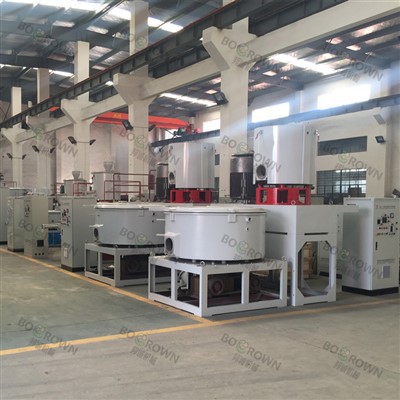
Let’s start with the basics. Most people picture a mixer as a big spinning blade that turns the contents of a tank, right? For low-speed mixers, that’s pretty much all they do. The blade creates a gentle swirl, which moves the materials around, and over time, the solid particles slowly disperse into the liquid. But that process has major flaws. If you’re mixing a thick liquid and a heavy solid, like a syrup and powder, the solid often sinks to the bottom before it can mix in. That means you end up with undispersed lumps at the bottom of the tank, and a watery liquid on top. It can take hours to get even a partially mixed batch, and you still might have to go back and manually scrape the sides and bottom to get everything in. For industries like pharmaceuticals, food and beverage, or cosmetics, that’s not just inefficient—it’s a quality risk. Lumps can ruin a batch, cause inconsistent results, and even create safety issues if you’re working with ingredients that need to be fully dispersed for efficacy.
High-speed mixers change that entirely, and it all comes down to one key difference: shear force. Shear force is just the force that acts to break materials apart, and high-speed mixers generate a lot more of it than standard equipment. Let’s take a concrete example. If you’re mixing a liquid that’s 1,000 centipoise (that’s about the thickness of honey) with a solid that’s a fine powder, say, titanium dioxide used in sunscreen. A low-speed mixer would spin the blade at 50 to 100 RPM. At that speed, the powder would sit at the bottom of the tank, the blade would push around a small area, and you’d have to let it run for an hour just to get a semi-mixed slurry. A high-speed mixer, though, can spin at 3,000 to 10,000 RPM. The blade doesn’t just stir the liquid—it creates a vortex (that’s the big dip in the middle of the tank as the liquid spins) that pulls solids down into the center of the mix, where the blade is moving the fastest. But even more importantly, the high speed of the blade creates intense shear forces that pull the solid particles apart from each other and break any small agglomerates (clumps of powder) apart before they can get stuck in the liquid.
That’s not just theory. We see this in action every week with our customers in the cosmetics industry. One of our clients makes a natural face moisturizer that uses shea butter, water, and a fine clay powder. Before they invested in our high-speed mixer, they were using a low-speed machine that took 45 minutes to mix each batch, and they still had up to 12% of the batches rejected because of undispersed clay lumps. After switching to our equipment, they cut mixing time to 8 minutes, and rejection rates dropped to almost zero. They told us that not only did they save time on mixing, they also saved money on raw materials because they no longer had to toss out batches with lumps. That’s the real value of high-speed liquid-solid mixing—it’s not just faster, it’s more consistent and more cost-effective.
Of course, not all high-speed mixers are created equal. That’s the part I spend a lot of time explaining to customers, because many people think any high-speed mixer will work for liquid-solid applications, and that’s not true. For example, some high-speed mixers are designed only for high-viscosity materials, like thick pastes or adhesives. Those machines have blades that are shaped to fold and push thick materials, but they don’t create enough vortex or shear force for liquid and solid mixing. On the other end, some small, lab-scale high-speed mixers are great for small batches, but they can’t scale up to industrial production without losing effectiveness.
Our mixers are designed specifically for liquid-solid applications, and that starts with the blade design. We use a three-wing blade with a serrated edge—serrated edges create more friction and shear force than smooth blades, which is perfect for breaking down powder agglomerates. We also adjust the blade’s position in the tank: it’s not just sitting in the middle of the tank, it’s positioned close enough to the bottom to pull settled solids back up into the mix, but not so close that it scrapes the tank too hard and wears out the blade. We also add a baffle system to the tank—those are small, fixed plates that stick out from the sides of the tank. Without baffles, the liquid would just spin around in a circle, and solids would stay pushed to the outer edges, never getting pulled into the center. The baffles disrupt that circular motion, creating more turbulence and making sure every part of the batch is moving, not just spinning.
Another common question I get is about different types of solids. Can high-speed mixers handle coarse solids, like salt crystals, or only fine powders? The answer is yes, as long as the mixer is sized correctly for the application. Fine powders (like flour, clay, or pharmaceutical excipients) disperse easily, but coarse solids (like granules, pellets, or even small metal beads) can be tricky because they’re heavier and more likely to sink. For those applications, we often recommend a combination of high-speed mixing and a smaller, slower anchor blade that sits at the bottom of the tank. The anchor blade moves more slowly, pushing the coarse solids around the bottom of the tank, while the high-speed top blade creates the shear force to mix them into the liquid. It’s a two-part system, but it’s way more effective than trying to use a single low-speed blade, which would just push the coarse solids around without mixing them in.
We also work with customers who have very different liquid-solid ratios. Some are mixing 5% solid into 95% liquid, like paint pigments. Others are mixing 70% solid into 30% liquid, like ceramic slips used for making pottery. High-speed mixers work well across that whole range, but you do have to adjust the speed and blade design. For low-solid mixtures, like paint, you want a faster blade to create a strong vortex that pulls the small amount of powder into the liquid. For high-solid mixtures, like ceramic slips, you need a slightly slower blade, because too much speed can aerate the mix (pump air bubbles into the liquid) which causes defects in the final product. Aeration is another big concern with liquid-solid mixing—for applications like injection molding materials or pharmaceuticals, air bubbles can ruin the final product. That’s why our mixers are designed with variable speed controls, so you can adjust based on your specific ratio and material, and we also have vacuum options for customers who need to completely remove air bubbles after mixing.
Let me share a story from a customer in the agricultural industry to show how this works in a different sector. They make liquid fertilizer that combines a liquid nitrogen base with a solid micro-nutrient powder (zinc, iron, and manganese). Before they used our mixer, they would mix the liquid in a tank with a pump, and the solid powder would sit at the bottom, so they had to add the powder slowly over an hour while the pump ran. Even then, about 10% of the powder would stay undispersed, and when the fertilizer was applied to crops, those lumps would clog spray nozzles. They tried a standard high-speed mixer, but it aerated the mix too much, making the fertilizer less stable. When they tested our mixer, we adjusted the blade speed to 5,000 RPM and added a special defoamer option for the mix. They were able to add all the powder at once, mix it in 12 minutes, and there were no undispersed lumps. The spray nozzles stopped clogging, and they cut their mixing time per batch from 1 hour and 15 minutes to just 15 minutes. That’s the kind of result we strive for with every customer.
I think a lot of people are also skeptical because they’ve heard horror stories about liquid-solid mixing: batches that take too long, lumps that ruin product, wasted raw materials. Those aren’t problems with high-speed mixing itself—they’re problems with the wrong type of mixer for the job. Low-speed mixers, for example, can work for simple applications, but they can’t handle the demands of modern manufacturing where consistency and efficiency are key. High-speed mixers eliminate so many of those problems because they work at the molecular level, not just the physical level. They don’t just move materials around—they break down the bonds between solid particles and between solid and liquid, creating a uniform mix that’s consistent every single batch.
Of course, high-speed mixing isn’t for every application. If you’re mixing very large pieces of solid (like wood chips or metal parts) with a liquid, you’ll need a different type of equipment, like an industrial washer or tumbler. But for most liquid-solid mixtures used in food, cosmetics, pharmaceuticals, agriculture, and manufacturing, high-speed mixers are not just a good option—they’re the best option. The key is to work with a supplier who understands both the technology of the mixer and the specific needs of your industry. That’s why we don’t just sell equipment—we work with every customer to test their materials, adjust the mixer settings, and make sure they get exactly what they need.
I’ve been in this industry for 12 years now, and I’ve seen firsthand how a good mixer can transform a small business into a major player, or help a large corporation reduce costs and improve quality. I’ve talked to home bakers who use our mixers to make custom cake batter that’s lump-free every time, to pharmaceutical engineers who rely on our mixers to ensure their drugs are evenly dispersed and safe for patients. At the end of the day, the question isn’t just “Can a high-speed mixer mix liquids and solids together?” The real question is, can your current mixer do that reliably, efficiently, and without wasting time or materials?
If you’re currently dealing with undispersed solids, long mixing times, or inconsistent batches, we can help. We’ve designed our high-speed mixers specifically for liquid-solid applications, with adjustable speeds, custom blade designs, and options to control aeration and vacuum. We offer free sample testing in our facility, so you can bring your materials, test the mixer, and see the results for yourself before you make any investment.

Don’t waste another hour mixing batches that don’t meet your standards or another dollar on raw materials that get wasted because of poor mixing. Contact us today to schedule a consultation or book a sample test, and let’s find the right high-speed mixer for your liquid-solid mixing needs.
PVC Automatic Mixing System References
- McCabe, W. L., Smith, J. C., & Harriott, P. (2005). Unit Operations of Chemical Engineering (7th ed.). McGraw-Hill Education.
- Paul, E. L., Atiemo-Obeng, V. A., & Kresta, S. M. (2004). Handbook of Industrial Mixing: Science and Practice. John Wiley & Sons.
- Miller, R., & Mann, J. (2018). Mixing Technology for Cosmetic and Pharmaceutical Formulations. Journal of Cosmetic Science, 69(3), 215-228.
- Davis, K. (2020). High-Speed Mixing of Liquid-Solid Mixtures: Applications in Agricultural Fertilizer Production. Agricultural Engineering International: CIGR Journal, 22(4), 187-195.
- Rieger, F. (2019). Particle Dispersion in High-Speed Mixers: Mechanisms and Industrial Implications. Powder Technology, 345, 456-465.
ZJG BC Machinery Co., Ltd.
As one of the most professional high speed mixer manufacturers and suppliers in China, we’re featured by quality products and good price. Please rest assured to buy cost-efficient high speed mixer for sale here from our factory. Contact us for custom service and OEM service.
Address: No.8 Lexi Road, Leyu Town, Zhangjiagang City
E-mail: sales@bcextruder.com
WebSite: https://www.bcextruder.com/
