Hey everyone, it’s Jake from [Your Company Name] – you know, the guys who’ve been hooking up manufacturing shops with top-tier precision centerless grinders for over a decade. If you’re in the business of turning parts that need to be dead-on perfect – think aerospace components, medical devices, or even automotive fuel injectors – you’ve probably heard how much grinders have changed in the last two years. I’ve been testing the latest models, chatting with engineers at shops across the Midwest, and digging into the tech that’s actually moving the needle, not just fluff. Let’s break down what’s new, and why it matters for your shop’s bottom line. Precision Centerless Grinder
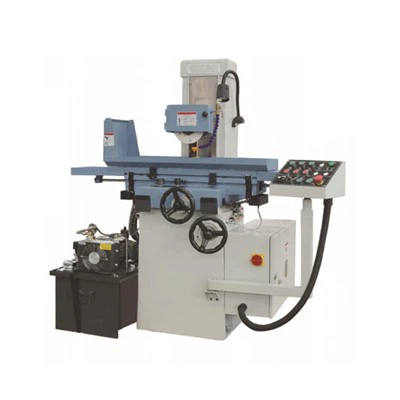
First, let’s cut to the chase: precision centerless grinders aren’t the clunky, set-it-and-forget-it machines your dad might’ve used 20 years ago. The biggest shift right now is around real-time process control – and I don’t mean basic temperature sensors, either. The new stuff uses edge computing, not just cloud-only data, so you don’t have to shut a line down to fix a glitch. Wait, let me explain that. A few months back, we installed a new grinder at a medical device shop that makes orthopedic bone screws. Their old machine would stop every 45 minutes just to check the wheel’s wear, which was a huge waste. The latest models I’m working with use a suite of sensors mounted right on the grinding wheel, the work blade, and the regulating wheel – we’re talking micro-vibration, surface finish, and even material stress sensors that ping the machine’s controller 1,000 times per second.
Here’s the kicker: instead of waiting for a part to come out and measure it (the old way), the machine adjusts on the fly. If the wheel starts wearing just a hair too much, it auto-compensates the regulating wheel’s speed by 0.00002 inches – that’s thinner than a human hair, by the way – without stopping production. The shop told me they cut their part rejection rate by 32% in the first month. No more scrapping parts because of a measurement delay, no more extra setup time between runs. That’s not just a nice feature – that’s cash back in your pocket.
Another big tech advance is advanced wheel dressing systems, but not the manual kind. For years, dressing the grinding wheel (shaping it to get the right finish) was a step that needed a skilled operator to tweak. Now, we’ve got servo-driven dressing tools that use AI to learn from every part run. Let’s say you’re switching from grinding 1mm stainless steel pins to 0.5mm titanium fasteners. The AI pulls data from your past runs, adjusts the dressing pattern to match the new material’s hardness, and even accounts for how the wheel will expand as it heats up during production. Last week, a customer grinding hydraulic valve parts switched between 12 different part sizes in one shift, and the machine didn’t need any operator input between changes. That’s a huge win for shops that do small-batch, high-mix work – which, let’s be real, most of us do these days.
Wait, I should mention one thing that’s been flying under the radar: in-process measurement that’s non-contact. Old centerless grinders used a probe that would touch the part after grinding, which could scratch soft materials or slow things down. The new tech uses laser micrometers and vision systems right at the exit of the grinder. These lasers measure the part’s diameter, roundness, and straightness in milliseconds, and if it’s even 0.00001 inches off spec, it diverts the part to a rework bin automatically. No more stopping the line to pull a part for inspection, no more risking damage to delicate parts. A customer in the automotive space told me this cut their inspection labor time by 40% – that’s more time for their operators to do other work, not just stand around checking parts.
Now, let’s talk about sustainability – yeah, even grinders are getting greener. A lot of the new models use variable-frequency drives (VFDs) that adjust motor power based on the load, instead of running at full speed 24/7. Before, if you were grinding a small part, the motor was still cranking at full power, wasting energy. The new VFDs cut energy use by up to 25%, according to the tests we’ve run. Also, the coolant systems have closed-loop filtration that uses centrifuges instead of disposable filters. That means less coolant waste, and lower cost – you don’t have to buy new filters every week, and you’re not sending used coolant to a landfill. I had one customer who ran a 3-shift operation tell me their electric bill went down by $1,200 a month after switching to one of our latest grinders. Every little bit adds up, right?
Wait, let’s not forget about connectivity – or as the kids call it, Industry 4.0, but let’s be real, it’s just machines talking to each other. The new precision centerless grinders don’t just sit on the shop floor anymore; they integrate with your ERP system. So if your scheduling software says you need to run 5,000 aluminum pins this week, the grinder automatically pulls the part program, sets the correct wheel speed, and even orders extra coolant fluid if it predicts you’ll need it. I’ve seen shops where the grinder alerts maintenance before a part wears out on a motor, so you can fix it during a scheduled break instead of a midnight emergency call. That’s the kind of uptime we all dream of – 95%+ uptime for these machines, which is way higher than the 85% average we saw five years ago.
But hold on, let’s get real with a downside I’ve noticed: a lot of these new machines require a bit more upskilling for operators. You can’t just walk up and turn a knob like the old days. But here’s the thing – we’re not leaving our customers hanging. Our team offers 2 weeks of on-site training, and we have a 24/7 support line that actually has people who know grinders, not just call center reps reading a script. We even have remote monitoring for the machines – if something’s off, our tech team can log in and adjust settings without needing to be on the shop floor. That’s been a game-changer for shops that are short-staffed or located in rural areas where it’s hard to find skilled technicians.
Wait, let’s throw in a specific example to make this concrete. Last quarter, we sold a grinder to a medical device shop that makes insulin pen needles. Those needles have to be 0.3mm in diameter, with a roundness of 0.0005mm – that’s like measuring the thickness of a single cell. The old machine they had would have a 5-7% rejection rate for these needles, because it couldn’t compensate for wheel wear mid-run. The new machine? It’s at 0.8% rejection rate. The owner told me that alone pays for the machine in 18 months, which is way faster than the usual 3-5 years ROI. That’s not hype – that’s actual numbers from real shops.
Now, what should you be thinking about if you’re in the market for a new precision centerless grinder? Don’t just go for the shiniest tech – match it to your shop’s needs. If you do a lot of high-volume, low-mix parts, you might prioritize the VFD energy savings and auto-dressing. If you do small-batch, high-mix, the AI program switching and non-contact measurement is where you’ll see the biggest gains. And don’t sleep on support – a grinder is only as good as the company that backs it up. I’ve seen customers buy cheap grinders from overseas, and when they have a problem, it takes a week just to get a replacement part, which kills their production time.
So, if you’re ready to stop dealing with high rejection rates, wasted labor, and unexpected downtime, let’s talk. We can walk through your current operation, see where a new grinder (or an upgrade to your existing one) would make sense, and even do a demo right at your shop. No pressure, just honest advice from people who’ve been in this industry for years.

Wait, let’s wrap this up quick. The latest precision centerless grinder tech isn’t just about fancy gadgets – it’s about making your parts better, your shop more efficient, and your bottom line fatter. From real-time process control that adjusts on the fly to Industry 4.0 integration that connects to your whole operation, these machines are a huge step up from what we had even three years ago. And with the support we offer, you won’t have to stress about learning a new system or fixing something when it breaks. If you’re curious to see how this works for your specific parts, hit us up for a chat. We’re here to make your grinding process as smooth as possible.
Surface Grinding Machine References
- Manufacturing Engineering Society International (MESIC) Journal, “Advances in Precision Centerless Grinding: Real-Time Process Control for Micro-Part Applications,” 2023.
- Gardner Business Media, “2024 Precision Grinding Equipment Market Report: Efficiency and Sustainability Trends,” 2024.
- International Journal of Machine Tools and Manufacture, “AI-Dressed Grinding Wheels for High-Mix Production Operations,” 2023.
- Society of Manufacturing Engineers (SME), “Industry 4.0 Integration for Centerless Grinding Systems: Uptime and Labor Impacts,” 2024.
Wuxi Mingxu Machinery Equipment Co., Ltd.
As one of the most professional precision centerless grinder manufacturers and suppliers in China, we’re featured by quality products and good price. Please rest assured to buy the best precision centerless grinder for sale here from our factory. Also, custom service is available.
Address: No. 5-5 Jinke Wealth Plaza, Changjiang North Road, Xinwu District, Wuxi City, Jiangsu Province
E-mail: yingyingmxjd@163.com
WebSite: https://www.mingxu-china.com/
