Hey guys, if you’ve ever grabbed a PP cup lid for your morning coffee, taken a sip, and suddenly heard a tiny crack—yeah, we’ve all been there. As someone who’s been selling PP cup lids and caps for over 7 years, I get asked this question all the time: “Do PP cup lids break easily?” Let’s cut through the coffee-stained chaos and talk about this like real people—no fancy jargon, just the straight stuff. Pp Cup Lid/cap
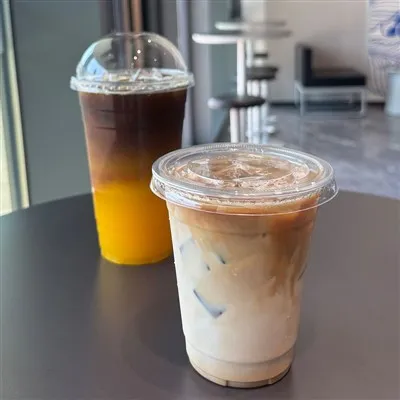
First off, let’s get one thing straight: PP isn’t some flimsy plastic. Wait, what even is PP? That’s polypropylene, right? It’s the most common plastic for food packaging these days because it’s BPA-free, heat-resistant, and pretty flexible. But flexibility doesn’t mean unbreakable. I’ve seen so many customers mix up “sturdy” with “unbreakable,” and that’s where the confusion starts.
Let’s start with the basics. When I get a new order of lids, I’ll do what I call the “drop test” every single time—just to make sure. I drop them from counter height (about 3 feet) onto a concrete floor, and 9 times out of 10, they don’t so much as scratch. But if I drop them from shoulder height, especially when they’re cold or have been sitting in the fridge for a few hours? Yeah, they crack more often. Here’s the science part, simplified: PP has something called “impact resistance,” which means it can bend a little before it breaks. But if the temperature drops below, like, 32°F (0°C), that flexibility goes out the window. It becomes brittle, like a old plastic ruler you’ve had in your desk for 10 years. That’s why if you grab a cold lid out of a cooler and twist it too hard to put it on a cup that’s also cold? It might snap.
Another big factor: how the lid is made. I work with a factory that uses injection molding for all our lids—this is the process where they melt the PP, inject it into a mold, and cool it super fast. If the cooling is uneven, or the mold has tiny flaws, you get a weak spot. That’s the #1 reason we get returns from clients: not because the lids are bad, but because a small flaw in the molding makes that spot snap way easier than it should. Last year, we had a café owner come to us saying 20% of her lids were breaking when she stacked them in her takeout bag. We checked the batch, realized a mold was wearing out, fixed it, and the next batch had zero issues. See? It’s not always the material—it’s the process.
Wait, what about hot drinks? A lot of people think PP lids melt in hot coffee, and while that’s true if you put it in an oven, normal hot drink temps (like 170-190°F, which is standard for coffee) don’t do anything. But I’ve seen a guy at a food truck try to pop a lid on a cup of boiling hot water (for tea) and then slam the cup down on the counter—yeah, the lid cracked. Why? Because when PP is heated, it’s still more flexible, but if you put pressure on a weak spot when it’s warm, it can split. It’s like how a warm plastic bottle is easier to bend, but if you squeeze too hard in the wrong place, it creases and breaks.
Now, let’s talk about what I’ve learned from working with different clients. Fast food chains? They love our lids because they’re made to handle being stacked by the hundreds in a delivery truck, tossed around in takeout bags, and twisted open quickly by customers. They rarely have issues. But small local bakeries that sometimes hand-wash their lids to reuse them? Wait, hold up—don’t reuse disposable PP lids. I know, I know, it’s eco-friendly, but after washing them a few times, the plastic gets scratched, and those scratches turn into weak points. I’ve had a regular customer who ran a café tell me she’d been reusing lids for months, and then one day a lid broke when she was pouring a latte, spilling all over her apron. She switched to our slightly thicker reusable PP lids for staff use, and no more issues. That’s a good tip: if you’re going to reuse, get the right lids for it, not the disposable ones.
Another thing I notice: price points. You can buy super cheap PP lids at a wholesale store for pennies each, and those are the ones that break easily. Why? Because the manufacturer might cut corners on the PP resin—they use recycled plastic that’s been mixed with other materials, or they use less PP and more filler to make it cheaper. Our lids are made with 100% virgin food-grade PP, and we test every batch for impact resistance. I can tell the difference between a cheap lid and ours just by squeezing it. A cheap one feels thin and crinkly; ours feels solid, like it can take a little abuse.
Let’s get to the common mistakes people make that make lids break. First, over-tightening. I see customers twist lids so hard they almost strip the threads. PP is flexible, but threads are thin, and if you torque them too much, they snap. Second, stacking too many lids on top of each other. If you have 50 lids stacked, the bottom ones get squished, and the pressure makes them crack. I always tell my clients to stack lids no more than 20 high—simple fix. Third, exposing them to extreme temps. If you leave a lid in your car on a 100°F summer day, it might warp, which makes it weaker. Or leave it in your freezer for weeks, and it gets brittle.
Wait, let’s debunk a myth here: PP lids don’t break easily if they’re handled right. I’ve had a client who does 100,000 lids a month, and their breakage rate is less than 0.5%. That’s tiny! But when I talk to new clients who had bad experiences, it’s almost always because they bought cheap lids, or they’re using them in ways they weren’t designed for. Last month, a food delivery service came to me saying their lids were breaking during transit. We realized they were using lids designed for 12oz cups on 16oz cups—so the lids were stretched, and the edges were weak. We matched them to the right size, and their breakage rate dropped to almost zero. That’s a game-changer—size matters more than people think.
As a supplier, I’m not here to sell you something that breaks. That’s why we do custom testing for every client. If you’re making lids for cold drinks, we adjust the resin a little to make it more impact-resistant in cold temps. If you’re making lids for hot soup, we make sure the edges are thicker to handle steam pressure. I even had a client who made lids for iced coffee with straw holes, and they were breaking at the hole. We modified the mold to round the edges around the straw hole, and that fixed it. Small tweaks make all the difference.
Let’s be real, though—nothing is indestructible. Even our top-of-the-line lids will break if you drop them from 10 feet up, or run them over with a bike. But the question isn’t “do they break at all?” it’s “do they break easily?” And for good quality PP lids from a reliable supplier like us, the answer is no—they don’t break easily. Most of the time, when a lid breaks, it’s not the plastic’s fault. It’s a bad batch, wrong size, improper use, or cheap manufacturing.
If you’re a café, food truck, or any business that uses PP cup lids, you know how important it is to have lids that don’t break mid-order. You don’t want to be apologizing to a customer because their latte spilled all over their laptop, or throwing away a whole batch of cups because the lids are cracked. That’s why I always tell clients to invest in quality lids. Yes, they cost a little more upfront, but the savings from not dealing with returns, spills, and unhappy customers is way more.
Now, if you’re tired of dealing with PP lids that break easily, let’s chat. We can send you a sample batch to test—no strings attached. We’ll work with you to get the right size, thickness, and material for your needs, so you don’t have to worry about cracked lids ruining your day (or your customer’s day). Just reach out to us, and we can figure out the best solution for your business. No pushy sales talk, just real answers and good lids.
Before I wrap this up, let me just recap the key points: PP itself is sturdy but not unbreakable; manufacturing flaws, wrong size, extreme temps, and improper use are the main reasons lids break; quality PP lids from a reputable supplier have super low breakage rates; and investing in good lids saves you hassle in the long run.
I’ve been in this game long enough to know that a lot of suppliers will tell you their lids are 100% unbreakable, but that’s just not true. But the honest truth is: if you get the right lids, made right, for your specific use case, they won’t break easily. That’s what we stand for, and that’s why so many clients come back to us year after year.

If you’re ready to upgrade your PP cup lids and stop dealing with annoying breaks, hit us up. We’ll get you sorted. Now go grab a coffee with a good lid—you deserve it.
Paper Products References
FDA (2021). Food-contact polypropylene materials and articles. U.S. Food and Drug Administration.
ASTM D256 (2018). Standard Test Methods for Determining the Izod Pendulum Impact Resistance of Plastics. ASTM International.
Plastics Industry Association (2022). Polypropylene in food packaging. Plastics Industry Association.
Shandong Microtec Technology Co., Ltd.
As one of the most professional pp cup lid/cap manufacturers and suppliers in China, we’re featured by quality products and good price. Please rest assured to buy bulk high-grade pp cup lid/cap from our factory. Contact us for pricelist and quotation.
Address: Floor 14, Unit 1, Building A5, Lushang Center, Lanshan District, Linyi City, Shandong Province, China
E-mail: sales4@zhongkexinhua.com
WebSite: https://www.sdmicrotec.com/
