If you’ve ever walked the floor at a biotech manufacturing facility, a food and beverage processing plant, or a pharmaceutical production site, chances are you’ve passed a Production Tangential Flow Filtration (TFF) System humming quietly behind a wall of stainless steel piping. As a supplier of these systems, I get asked one question more than any other: “How does this same piece of equipment handle everything from fragile monoclonal antibodies to thick fruit purées?” The truth is, a Production TFF System isn’t a one-size-fits-all box—it’s a precision-engineered platform that adapts to the unique properties of every raw material it processes, and that adaptability is what makes it indispensable for modern manufacturing. Let me walk you through how we design our systems to tackle the raw materials our customers bring to us every day, with real-world lessons from the plants that rely on our equipment. Production TFF System
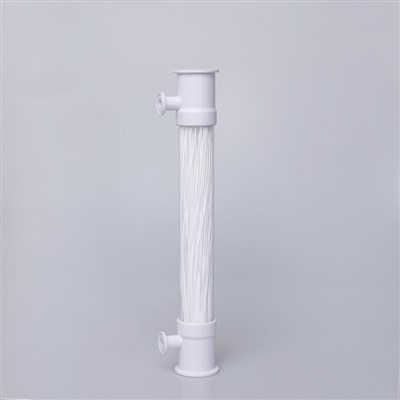
First, I need to set the stage for what TFF actually does, because not everyone reading this is a process engineer. Unlike dead-end filtration, where liquid is forced straight through a filter and all material larger than the pore size gets trapped on the surface, TFF uses crossflow: most of the process liquid flows parallel to the filter membrane, while only a small portion passes through as permeate. The parallel flow scours the membrane surface, preventing buildup that would clog the filter, which means higher throughput and more consistent product quality over long runs. That’s the core, but the variables change completely depending on the raw material.
Let’s start with one of the most delicate and high-stakes raw materials our customers process: monoclonal antibodies (mAbs) for biopharmaceuticals. When I meet with biotech R&D teams, they’re always nervous about damaging these large, sensitive proteins—one wrong step, and the mAbs lose their binding affinity, rendering the entire batch useless. For raw materials like cell culture broth containing mAbs, our Production TFF Systems are built with several specific tweaks. First, we use low-shear pump designs, usually centrifugal pumps with modified impellers or peristaltic pumps, to avoid tearing the fragile antibody molecules. We also size our membrane pore sizes precisely: for mAb recovery, we use 0.1 to 0.2 μm microporous membranes, which let small impurities like host cell proteins and media components pass through, while retaining the full antibodies. The flow rate is calibrated carefully too—we control crossflow velocity to stay between 0.5 and 1.5 m/s, a sweet spot that maintains enough shear to prevent fouling but not so much that it damages the proteins. Last year, a customer processing a pipeline of cancer immunotherapies told us that switching to our TFF System cut their mAb product loss by 12% compared to their old dead-end filtration setup, because we adjusted our system’s shear settings to match their specific antibody’s molecular weight. That’s the kind of customer win we live for.
Next up, a very different type of raw material: industrial food products, like fruit juices, purees, or protein concentrates for plant-based meat. These materials are thick, high in suspended solids, and often have a lot of pectin or fiber that can gum up membranes fast. When we design our TFF Systems for food manufacturing, the first change we make is to the membrane itself. We use larger pore sizes—usually 0.2 to 0.45 μm—with a wider flow path to let the chunky fruit particles or protein aggregates pass through the crossflow without getting trapped. We also add automatic backflush cycles, which pulse a small amount of permeate or water backward through the membrane every 15 to 30 minutes (adjustable based on the material) to dislodge any buildup on the surface. I remember a case study from a craft juice producer we worked with two years ago; they were struggling with their old system fouling every 2 hours during pear puree processing, which meant constant downtime and lost product. We modified our TFF System’s crossflow rate and backflush timing, and now their filters run for 18 hours straight before needing a flush. The key here is balancing throughput—food manufacturers can’t afford slow processing—with fouling control, which our systems adjust based on real-time pressure and flow sensors that we calibrate for food-grade applications. We also make sure all wetted parts are 316L stainless steel and meet FDA food contact standards, which is non-negotiable for this industry.
Then there’s the middle ground: things like viral vectors for gene therapies, industrial enzymes, or municipal water treatment chemicals. These raw materials are a bit less delicate than mAbs but more sensitive than fruit purees. For example, when processing viral vectors, which are used to deliver genetic material in gene therapies, we have to balance retention of the virus (which is around 100 nm in size) with removal of smaller impurities like cell debris. Our systems for this use asymmetric membranes—membranes with a tight skin layer on top and a more porous backing, which reduces the pressure needed to push liquid through while maintaining consistent retention. We also add automated pH and temperature control modules, because viral vectors can denature if the pH strays too far or the temperature spikes. One gene therapy startup we partnered with last year was trying to scale from a 10 L lab setup to 500 L batches, and they were worried about keeping their viral titer high during concentration. Our Production TFF System’s real-time monitoring let them track permeate flow and retentive purity every second, so they could adjust crossflow rate on the fly to prevent vector loss. They ended up hitting a 95% virus recovery rate, which was way higher than their previous system.
Wait, but what about really challenging raw materials—things that are highly viscous, have very small particles, or even things that could be abrasive? I’ve had customers bring me slurries for battery manufacturing nanomaterials, or fine chemical catalysts, and those present their own set of problems. For abrasive slurries, we use diamond-coated or ceramic membranes instead of polymer ones, because ceramic is way more resistant to scratches from hard particles. For high-viscosity materials, we adjust the system’s temperature to lower viscosity before filtration—heating a raw material to a controlled 40-50°C, for example, can cut viscosity by half, making it much easier for the crossflow to scour the membrane and let permeate pass through. One battery component manufacturer we worked with was processing a lithium iron phosphate slurry that was so thick it almost behaved like a paste at room temperature; adding our system’s integrated heating module, paired with high-shear crossflow, let them concentrate the slurry from 10% solids to 50% solids in one pass, without damaging the nanoscale particles that give the battery its performance. That’s the beauty of a modular Production TFF System—we don’t have to reengineer the whole machine for every raw material; we just swap out components (membranes, pumps, heating elements, controls) to match the material’s unique properties.
A lot of people outside the industry think TFF is just a filtration step, but it’s actually part of a larger downstream processing workflow. That’s why our systems are designed to integrate with existing process lines, whether that’s a cell culture bioreactor for pharma, a fruit pulper for food, or a slurry mixing tank for chemicals. We always start a project with a small-scale trial, usually at our in-house testing lab, because every raw material has quirks you can’t see in specs alone. Last month, a customer brought us a specialty biopolymer they were developing for wound care products, and their lab data suggested they needed a 0.1 μm membrane. When we ran the trial, we found that a 0.05 μm membrane gave them higher purity without losing product, just by adjusting crossflow rate. That’s the value of working with a supplier that doesn’t just sell you a system—we test your raw material, tweak the system settings, and deliver a setup that’s optimized for your exact product.
I should also talk about the operational side, because even the most well-designed system won’t perform well if it’s not operated correctly. For our customers processing mAbs, we provide training sessions on how to adjust crossflow rate and pressure during different stages of filtration (concentration vs diafiltration, which is when you add water to remove residual salts). For food manufacturers, we share maintenance schedules tailored to their raw material—like how often to flush the backflushes with citric acid to remove pectin buildup. For our chemical processing customers, we provide protocols for cleaning membranes with caustic solutions to remove abrasive slurry residue. We even offer remote monitoring for our systems, so our technicians can check in on process performance during a long run, alerting the customer if crossflow is dropping and suggesting a quick adjustment before it becomes a problem.
Now, I know some process engineers might be skeptical—“Can a single system really handle all these different materials?” The short answer is yes, when it’s designed with flexibility at its core. I’ve seen our Production TFF Systems process 10 different raw materials in one month at a large contract manufacturing organization (CMO), switching back and forth between mAb, viral vector, and enzyme batches, without any cross-contamination or performance drops. The key is that the system’s core components are modular: you can swap membranes, change pump settings, adjust temperature and pH controls, all without rebuilding the entire machine. That’s a big difference from older, custom-built TFF systems that are designed for one specific raw material and can’t be repurposed when a customer’s product line changes.
At the end of the day, the biggest pain point our customers face is consistency. A batch that works perfectly in the lab doesn’t always scale up, and switching raw materials shouldn’t mean investing in a whole new piece of equipment. Our Production TFF Systems are built to solve that problem, by adapting to whatever raw material comes through the door, while maintaining the purity, yield, and throughput that manufacturing operations need.

If you’re a process manager, production engineer, or R&D lead looking to upgrade your filtration process for a new raw material, or if you’re struggling with fouling, low yield, or downtime in your current setup, I’d love to talk through your specific needs. We can run a free trial on your raw material at our in-house lab, walk through how our Production TFF System can be customized for your product, and help you find a solution that fits your process.
Microfiltration Cassettes References:
- Jornitz, M. W., & Mullen, L. (2017). Tangential Flow Filtration: Principles and Applications in Biopharmaceutical Manufacturing. BioPharm International, 30(8), 24-31.
- Food and Drug Administration. (2021). Guidance for Industry: Processes and Controls for Food Contact Substances. U.S. Department of Health and Human Services.
- Strathmann, H. (2011). Membrane Separation Processes. Wiley-VCH.
- Eon-Duval, A., & Brooks, J. (2020). Scaling Tangential Flow Filtration Processes for Viral Vector Manufacturing. Biotechnology Progress, 36(3), e2908.
Hangzhou Guidling Technology Co., Ltd.
As one of the leading production tff system manufacturers and suppliers in China, we also support customized service. We warmly welcome you to wholesale high quality production tff system in stock here from our factory. For quotation, contact us now.
Address: No.795, 18th Street, Qiantang New District, Hangzhou City, Zhejiang Province, China
E-mail: export1@guidling.net
WebSite: https://www.guidlingfiltration.com/
