Hey everyone, let’s cut to the chase—when you’re working with coatings, adhesives, composites, or even concrete, the last thing you want is for your end product to fall apart sooner than it should. I’ve been a hardener supplier for 12 years now, and more times than I can count, I’ve gotten calls from folks asking, “Why did my project fail so fast?” Half the time, the answer’s not the base material—it’s the hardener they paired it with. Today I wanna break down exactly how a hardener affects durability, no jargon, just real talk from someone who’s mixed more batches than I can remember. Hardener
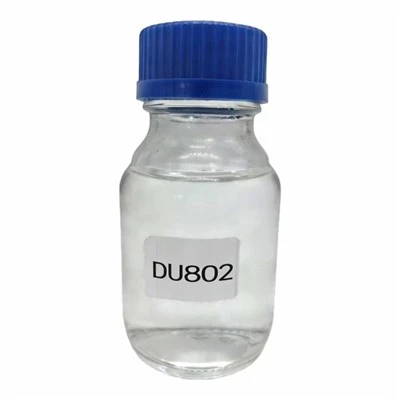
First, let’s get one thing straight: a hardener (or curing agent, if you wanna use the technical term) is not just an afterthought add-on. It’s the component that kicks off the chemical reaction that turns your goopy, moldable base—think epoxy resins, polyurethane, even some concrete mixtures—into a solid, strong, long-lasting material. Skip the right hardener, or pick the wrong one, and you’ve got a mess that chips, cracks, or fades before you even invoice your client.
Let’s start with the basics of how that reaction works, because it’s the foundation of durability. Most base resins are “functional” molecules—they’ve got these little reactive groups (like epoxides in epoxy or isocyanates in poly) hanging around, waiting to bond. A hardener’s job is to be the match that lights that bond: it attaches to those reactive groups, forming a cross-linked network. Think of it like a 3D spider web, where the resin strands are the silk, and the hardener is the tiny threads that link every strand together. The tighter and more uniform that web, the stronger and more durable the material. If you use a hardener that doesn’t link evenly, you’ve got gaps in the web—weak spots that break down fast.
I had a customer last year who was doing a commercial warehouse floor. They used a generic epoxy resin they found online, paired it with a cheap hardener that was supposed to be a “one-size-fits-all” option. Six months later, the floor was chipping all over the high-traffic areas, and the edges were peeling away from the concrete slab. They called me panicking, and when we tested their leftover batch, it turned out the hardener was under-catalyzed—meaning there wasn’t enough of it to form a full cross-linked web. The gaps let moisture seep in, and when forklifts rolled over it, the weak spots just gave way. That’s a perfect example of how picking a cheap, mismatched hardener kills durability before you even lay down the material.
Now, let’s talk about the different ways hardeners impact durability, starting with chemical resistance. If your product’s gonna be exposed to chemicals—like a garage floor that spills oil and antifreeze, or a water tank that holds cleaning solutions—your hardener choice is non-negotiable. Different hardeners create different cross-linked networks, and some are way better at standing up to specific chemicals. Aliphatic amine hardeners, for example, make epoxy that’s resistant to alkalis and sunlight, so it doesn’t yellow when it’s outside. Aromatic amine hardeners, on the other hand, are tougher against acids and solvents, so they’re great for industrial parts that get dipped in chemicals. I once supplied a hardener to a manufacturer of agricultural spray tanks—they were using a generic hardener that broke down when exposed to herbicides, leading to leaks. Switched to a specialized aromatic amine hardener, and the failure rate dropped 90% within a year.
Next up: mechanical strength. Things like tensile strength (how much the material can stretch before breaking), impact resistance (how well it handles drops or hits), and abrasion resistance (how it holds up to scraping) all hinge on the hardener. If you need a material that’s gonna take a beating—like a truck bed liner or a bridge coating—you don’t want a hardener that forms a brittle, tight web. Polyamine hardeners, for example, create a more flexible cross-linked network that’s tough against impacts, while cycloaliphatic amine hardeners are stiffer, so they’re better for things that need to hold shape, like electronic encapsulants that protect circuit boards. I had a customer who made custom phone cases—they were using a brittle epoxy that cracked when someone dropped their phone. We switched them to a polyamine-based hardener, and the cases now pass 6-foot drop tests every time without a crack. That’s durability you can see.
Environmental durability is another big one, and it’s where a lot of people slip up. Hardeners determine how well the material handles temperature changes, UV light, moisture, and humidity. If you’re working on an outdoor sign, for example, UV radiation will break down the resin over time, causing fading and cracking—unless your hardener has UV-resistant additives. A lot of cheap hardeners don’t have that, so their outdoor coatings fade in 6 months. Aliphatic amine hardeners, like I mentioned earlier, don’t yellow under UV, so outdoor projects using them will look good for 5+ years. For projects in extreme cold, you need a hardener that doesn’t make the resin brittle when temperatures drop. Polyamide hardeners are great here—they keep the material flexible even in freezing temps, so they don’t crack in places like refrigerated truck parts or arctic construction coatings. Thermal resistance is part of this too: if your material’s gonna be near a heat source, like engine parts or cookware coatings, a hardener with high glass transition temperature (Tg) is key. A high Tg means the material stays solid and strong at high temps, not softening or melting. I had a customer who made cookware non-stick coatings—they were using a hardener that softened at 300°F, so the coating peeled off after a few uses. Switched to a high-Tg hardener, and now their coatings hold up to 500°F without issues.
Wait, also—mix ratio matters, and that’s 100% on the hardener. Every hardener has a specific mix ratio with the resin, usually written on the label in parts by weight or volume. If you get that wrong, even the best hardener will fail. Too little hardener, and you get under-cured, weak material like the warehouse floor I mentioned earlier. Too much hardener, and you get excess reactive groups that don’t bond, leading to a brittle, chalky finish. I always tell my customers to weigh both the resin and hardener, not just guess by volume, because even small offs (like a 10% overpour of hardener) can wreck durability. A lot of DIYers skip this, but it’s the #1 mistake I see that leads to early failure.
Another thing: compatibility. Not all hardeners work with all resins. I can’t tell you how many times a customer has come to me with a random resin they found at a surplus store, asking for a hardener that works with it. If the hardener’s not compatible, the cross-linking won’t happen at all, leaving a soft, sticky mess that never cures. I once had a guy who tried to make his own epoxy table using a polyester resin and an amine hardener—total flop, it never hardened, and he had to sand the whole thing off. That’s a waste of time, money, and material, all because he didn’t check compatibility.
So what does this mean for you, whether you’re a contractor, manufacturer, or DIYer? Don’t just grab the cheapest hardener off the shelf. Think about what your project’s gonna be exposed to: chemicals? Temperature swings? UV light? Heavy use? Talk to someone who knows hardeners (hi, that’s me!) to pick the right one. Skimping on the hardener might save you a few bucks upfront, but it’ll cost you way more in repairs, replacements, and unhappy customers later.
I’ve been in this game long enough to know that durability isn’t an accident—it’s intentional. It’s picking the right hardener, mixing it correctly, and understanding how those chemical bonds work to make your material strong enough to last. I’ve seen projects that should’ve failed fall apart, and projects that should’ve been fragile last decades—all because of the hardener choice.
If you’re working on a project and you’re not sure if your hardener is the right fit, or you need something tailored to your specific needs, hit me up. I’ve got hardeners for every application, from small DIY jobs to industrial-scale projects, and I’ll help you pick the one that’ll make your material last as long as it’s supposed to. No generic, no one-size-fits-all, just the right hardener for your job.
Wait, before I wrap this up, let’s get one more myth out of the way: harder isn’t always better. I’ve had customers who think “oh, a hardener that makes the material rock-hard is the most durable.” But that’s not true. For a floor, you need a balance of hardness and flexibility—too brittle, and it cracks under stress. For a part that’ll be exposed to impact, flexibility is key. It’s all about matching the hardener’s properties to your project’s demands, not just picking the hardest one.
That’s the thing about hardeners—they’re the unsung heroes of material durability. You don’t notice them when everything’s working, but when they’re wrong, you notice fast. After 12 years in this business, I’ve seen it all, and the biggest takeaway is this: invest in the right hardener, and your material will last. Skip it, and you’ll be back to square one way sooner than you want.
If you’re working on a project and need a hand picking the right hardener, don’t hesitate to reach out. I’m here to help you get your durability right the first time.
Rubber Primer References:
- Ashby, M. F., & Jones, D. R. H. (2012). Engineering Materials 2: An Introduction to Microstructures, Processing and Design. Butterworth-Heinemann.
- Pizzi, A., & Mittal, K. L. (2003). Handbook of Adhesive Technology (2nd ed.). CRC Press.
- Klein, L. C. (1994). Sol-Gel Science: The Physics and Chemistry of Sol-Gel Processing. John Wiley & Sons.
- Lambourne, R., & Strivens, T. A. (1999). Paint and Surface Coatings: Theory and Practice (2nd ed.). Woodhead Publishing.
Guangdong Yrbest High Polymer Technology Co., Ltd.
Guangdong Yrbest High Polymer Technology Co., Ltd. is one of the most professional hardener manufacturers and suppliers in China, featured by quality products and good price. Please rest assured to buy bulk advanced hardener from our factory. Contact us for quotation and free sample.
Address: Room 1701, No. 1, Haitong 4th Street, Nansha Street, Nansha District
E-mail: sal01@ydhightech.com
WebSite: https://www.ydhightech.com/
