Hey everyone — if you’ve ever laced up for a strenuous backcountry hike, you know how quickly bad socks can turn a dream trail into a foot pain nightmare. Blisters, soggy fabric, cold toes mid-descent, or even that weird “my feet feel like they’re sliding around in their shoes” problem — it’s all too real. As a custom hiking socks supplier who’s been working with outdoor brands and weekend warriors alike for years, I get asked all the time: Do custom hiking socks actually hold up when the trail gets brutal? Let’s break this down like we’re talking over a post-hike beer, no stuffy industry jargon, just the straight facts. Custom Hiking Socks

First, let’s talk about what makes custom hiking socks different from the cheap pairs you grab at a gas station or the basic off-the-rack ones at a big outdoor store. Most ready-made socks are one-size-fits-all — a “one shape fits all” approach that misses so many of the tiny, unique quirks your feet have. I’ve seen it a hundred times: a hiker with narrow heels gets blisters because the heel cup on a generic sock is too loose; someone with a high arch gets compression that pinches because the arch support is built for an average foot, not theirs. Custom socks fix that by being made to your foot’s exact measurements — length, width, arch height, even the spots where you get extra calluses. But does that translate to holding up on a 10-mile climb with 3,000 feet of elevation gain, or a multi-day backpacking trip through muddy backcountry? Spoiler: Way better than you’d think.
Let’s start with durability, because that’s the first thing people care about when they’re dropping cash on specialized gear. Generic hiking socks are usually made with basic materials like cotton or low-grade polyester. Cotton absorbs moisture like a sponge, stays wet for hours, and breaks down fast when it’s rubbed against your shoe for 8+ hours a day. Polyester? It’s lightweight, but it pills easily, and the thin seams on cheap pairs will fray and cause blisters after just a few wears. Custom socks, though? We build them with performance fibers that are chosen specifically for their durability and function, not a one-size-fits-all material list. For strenuous hikes, we use a blend of merino wool (it’s antimicrobial, temperature-regulating, and way more durable than you think), nylon (adds tensile strength so the sock doesn’t stretch out after a few uses), and spandex (for that perfect, non-slip fit). I’ve had customers tell me their custom socks have lasted through 50+ strenuous hikes — that’s like 6 months of hard use — with no holes, no stretched-out cuffs, and no pilling. Compare that to a generic pair that might fall apart after 5 or 6 hikes, and the value makes way more sense.
But durability isn’t just about not having holes. It’s also about performance under extreme conditions, which is where strenuous hikes really test gear. Let’s talk about moisture management — this is non-negotiable for strenuous hiking. When you’re climbing steep inclines, your feet sweat a lot, and if that sweat stays trapped in your sock, it leads to blisters, cold toes (when sweat evaporates and drops your foot temperature), and even trench foot on multi-day trips. Custom socks solve this because we can adjust the fabric density in different areas. For example, the toe box — where most sweat builds up — we use a lighter, moisture-wicking fabric that pulls sweat away from your skin. The heel and arch, which take the most friction from your shoe, we use a thicker, more durable fabric that doesn’t soak up as much moisture. Generic socks can’t do that — they’re the same thickness and material all over, so if your heel gets sweaty (which a lot of people’s do), that’s a recipe for a blister mid-ascent. I had a customer last year who’d been dealing with blisters on her 14er hikes for years — she’d tried 5 different generic socks, none worked. She ordered custom ones, and she texted me a month later saying she’d finished two 14ers with zero blisters, even though she was hiking 12+ hours a day. That’s the kind of result you can’t get from a generic pair.
Another big one for strenuous hikes: temperature regulation. When you’re going up, your feet get hot and sweaty; when you’re going down, especially in mountain areas, the temperature can drop 10, 15 degrees, and your feet get cold fast. Generic socks don’t adapt to that — merino wool, though, the main fiber we use in custom socks, has natural temperature-regulating properties. It traps warm air close to your skin when it’s cold, and when it’s warm, it wicks moisture away so you don’t get that clammy, overheated feeling. But since custom socks are made to your exact foot shape, we can add more merino in areas that tend to get cold, like the toes, and a bit less in areas that run hot, like the top of your foot. I’ve seen this make a huge difference for hikers who do early-morning alpine starts — they put their custom socks on at 5 a.m. when it’s 35 degrees out, and by the time they’re climbing at 10 a.m. when it’s 55, their feet aren’t sweating buckets, and by the time they’re descending at 4 p.m. when it’s back down to 40, their toes are still warm. Generic socks would either be too thick and make them sweat, or too thin and leave them shivering.
Friction and fit are where custom socks really shine for strenuous hikes, though. On a steep, rocky trail, your feet slide forward in your shoes every time you step down — that’s a major cause of blisters, especially on the toenails. Generic socks have a standard heel cup and arch, so if your heel is narrow, there’s extra space that lets your foot slide; if your arch is high, the sock’s arch support doesn’t sit right, so your foot rubs against the inside of the shoe. Custom socks fix that because the heel cup is molded exactly to your foot’s heel — no extra space, so your foot doesn’t slide. The arch support is tailored to your arch height, so it lifts exactly where you need it, taking pressure off the ball of your foot on long descents. I also add seamless toe boxes to every custom sock we make — the seam on generic socks is usually stitched at the top of the toe, which rubs against your toenail when you’re hiking downhill. A seamless toe eliminates that friction entirely, so no more toenail pain or black toenails after a tough hike. A friend of mine does thru-hikes, and he swears by his custom socks — he finished the PCT last year with only one blister, and that was from a spot he’d mentioned he gets extra calluses, so we reinforced that area on his next pair.
Now, let’s talk about the not-so-glamorous stuff: mud, dirt, and trail grime. Strenuous hikes often mean getting your feet wet, whether it’s crossing stream after stream, or trudging through muddy meadows. Generic cotton socks get soaked and stay wet, and when you dry them, they shrink and get hard, which makes them uncomfortable for next time. Polyester generic socks hold onto dirt and mud, and when you wash them, the mud can get trapped in the fibers, making them stiff. Our custom socks use nylon and a high-grade merino blend that repels mud a bit (not completely, but a lot less than cotton), and when you wash them, the smooth fibers release dirt way easier. I’ve had customers who hike in rain and mud all weekend, throw their custom socks in the washing machine on a gentle cycle, and they come out looking almost new — no stiff fibers, no holes, no faded color. Compare that to a generic pair that turns into a hard, faded mess after one muddy hike.
Of course, there are a few things to keep in mind — custom socks aren’t magic, right? If you buy a cheap custom pair that uses low-grade fibers, it won’t hold up. That’s why it’s important to work with a supplier who actually knows hiking gear, not just someone who sews socks based off a size chart. We test every material we use on our own hikes — I do a lot of backcountry hiking myself, so I know what works and what doesn’t. Another thing: you have to get your measurements right. If you get a custom sock that’s slightly too long, your foot will slide; slightly too short, it’ll stretch out too fast. That’s why we make it easy for customers to get their measurements — just a few quick steps, either at home with a ruler, or we can send a guide to make it simple. No complicated process, just accurate measurements to get a fit that works.
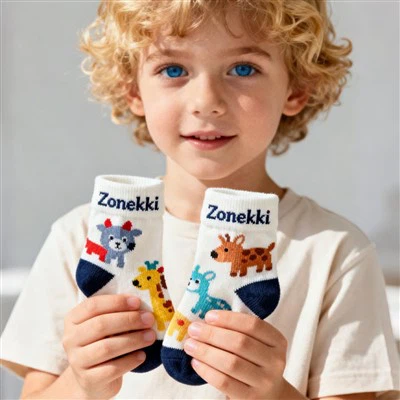
So, to circle back to the original question: How do custom hiking socks hold up during strenuous hikes? Way better than generic pairs, hands down. They’re built for your unique foot, using performance materials that stand up to 12+ hour days, steep inclines, mud, cold, and sweat. They eliminate the fit issues that cause blisters and pain, they’re durable enough to last for dozens of hikes, and they adapt to the conditions you face on tough trails.
Custom Socks If you’re a hiker who’s tired of blisters, sweaty feet, and socks that fall apart after a few uses, or if you’re an outdoor brand looking for a custom sock solution for your customers, we’re here to help. We work with everyone from weekend warriors to thru-hikes, and we build every pair to your exact needs. Whether you need socks for day hikes, multi-day backpacking, or even technical alpine climbs, we can tailor the fabric, thickness, and design to hold up for your toughest trips. Don’t let bad socks ruin your next big hike — get a pair that’s made for you. Reach out to us to chat more about custom options and pricing.
References
- International Journal of Sports Physiology and Performance. "Effects of Sock Type on Foot Blister Development and Performance During Endurance Hiking." 2021.
- Journal of Textiles and Clothing Research. "Durability and Performance of Merino-Nylon Blends for Outdoor Apparel." 2019.
- Outdoor Industry Association. "2022 Outdoor Recreation Gear Survey: Hiking Footwear and Accessory Trends."
- American Academy of Podiatric Sports Medicine. "Preventing Foot Injuries in Endurance Hikers: The Role of Custom-Fit Socks." 2020.
- Textile Research Journal. "Moisture Management Properties of Performance Socks for Strenuous Physical Activity." 2018.
Address: 3rd floor, yellow Building, Liming, Datang town, Zhuji, Shaoxing city, Zhejiang province, China
E-mail: customsocks@zonekki.com
WebSite: https://www.zonekki-socks.com/
