If you’ve ever stood in front of a high-speed fan on a sweltering summer afternoon to cool down, only to notice your skin feeling tight, flaky, or even slightly itchy by the end of the day, you’re not alone. As a supplier of high-speed fans, I get this question all the time: “Can a high-speed fan actually cause dry skin?” It’s a valid concern—we design our fans to keep spaces comfortable, not to leave people reaching for additional moisturizer mid-summer. Let’s break this down with real science, address common myths, and clarify how to use a high-speed fan without sacrificing skin health. High Speed Fan

First, let’s talk about how your skin works and what moisture loss actually means. The outermost layer of your skin, called the stratum corneum, is like a brick wall: dead keratinocytes (the “bricks”) held together by lipids (the “mortar”). One of its key jobs is to lock in moisture—mostly water that your body produces to keep skin soft, flexible, and protected. When this moisture barrier is disrupted, you get transepidermal water loss (TEWL)—that’s the technical term for water escaping from the deeper layers of your skin to the surface, where it then evaporates. That’s the root of dry skin.
Now, how does a high-speed fan factor into this? To understand that, we need to go back to basic physics and fluid dynamics. Air movement, regardless of fan speed, increases the rate of evaporation. If you leave a damp towel out on a counter, it will air-dry over a few hours. If you blow a regular desk fan over that same towel, it dries in minutes, because moving air carries away the water vapor that accumulates right above the towel’s surface. Your skin works the same way: when sweat or the thin layer of natural oils and moisture on your skin’s surface is exposed to still air, the vapor lingers and only a little escapes. A high-speed fan pushes that humid air away and replaces it with drier air, speeding up evaporation.
But here’s where most people’s confusion comes in: not all high-speed fans are equal, and not all skin types react the same way. A slow, low-speed fan might move air, but it doesn’t generate enough force to strip moisture from your skin. A high-speed fan—especially one used at close range, or on its highest setting—does move air fast enough to accelerate TEWL. That’s why you might notice the difference when you crank it up vs. keep it on low.
What makes high-speed fans different from regular fans? Our high-speed fans, for example, are designed with blade technology that moves significantly more air per minute than standard household fans—sometimes two to three times more, depending on the model. That higher air velocity means it’s more effective at cooling you down, but that same velocity also means it’s more aggressive at evaporating surface moisture. If you’re using a high-speed fan in a very dry environment (like an air-conditioned room in the winter, or a desert climate), this effect is amplified even more, because the air already has less moisture to begin with.
Now, let’s separate myth from fact. Some people claim that high-speed fans “pull moisture out of your skin deep down,” but that’s not how the skin’s barrier works. TEWL only happens at the surface—your skin’s deeper layers are protected by that lipid brick wall, so a fan can’t suck water out from under that. The dryness you feel is from surface moisture loss, not dehydration of your skin cells. That’s an important distinction, because it means the solution isn’t just drinking more water (though hydration is always good for skin) but protecting the surface barrier.
Who is most at risk for fan-related dry skin? If you have naturally dry skin, eczema, or psoriasis, your skin’s lipid barrier is already weaker. People with these conditions tend to have higher baseline TEWL, so adding a high-speed fan can push that over the edge. Similarly, if you’re using the fan directly on your body for long periods—like while sleeping with it blowing on your face all night, or sitting in front of it at a desk for 8+ hours a day—you’re exposing the same area to continuous fast air flow, which adds up. Even people with normal skin can get temporary dryness if they overdo it with a high-speed fan, especially in dry air.
But here’s the good news: high-speed fans don’t have to be the enemy of healthy skin. As someone who’s been supplying high-speed fans for years, I’ve worked with customers who want the cooling benefits of our products without the dryness, and there are simple, science-backed ways to make that happen.
First, adjust the distance and angle. If you’re using the fan on high, don’t stand or sit directly in the direct blast. Try positioning it 3 to 5 feet away from you, angled so the air circulates around the room rather than straight at your skin. This still keeps you cool (the benefit of air circulation) but reduces the air velocity hitting your body, which slows evaporation. I always tell our customers who work from home to place their high-speed fan across the room from their desk, so the air moves through the space without targeting their face or arms directly.
Second, pair your fan with a humidifier if your air is dry. If you’re running an air conditioner or living in a dry climate, the air’s relative humidity might be below 40%—that’s the threshold where TEWL starts to spike. Adding a small humidifier near your work or sleep area can bring humidity back up to the ideal 40-50%, which balances the air’s ability to hold moisture, so the fan’s evaporation effect is gentler. A lot of our commercial customers—like offices or warehouse break rooms—use this combo, especially in winter when heating systems dry out the air.
Third, adjust your skincare routine temporarily. If you know you’re going to be using a high-speed fan for long periods, swap out a lightweight moisturizer for a thicker, barrier-supporting cream. Look for products with ceramides, hyaluronic acid, or shea butter—these help reinforce your skin’s lipid layer, so it holds onto moisture better. I always recommend reapplying a light layer of moisturizer if you’re going to be sleeping with a fan on, since night is when your skin’s natural repair process is active, and you don’t want TEWL to disrupt that.
Fourth, use your high-speed fan strategically. You don’t need it on high all day. Most of our models have multiple speed settings, so use low or medium for general air circulation, and only crank it up to high when you need immediate relief from extreme heat. For sleeping, I suggest turning it on low and setting a timer—most people don’t need constant fast air while they rest, and a timer means it will turn off a few hours into sleep, when your skin’s need for moisture shifts.
Wait, but what about cases where high-speed fans are used in industrial or commercial settings? A lot of our clients are in manufacturing, construction, or agriculture, where workers need powerful cooling to stay safe in hot spaces. In those cases, the same principles apply—adjusting distance, adding temporary barrier protection, or using spot cooling only where needed. For example, a construction site might have high-speed fans blowing over work zones, but workers can wear lightweight, breathable clothing and reapply moisturizer throughout their shift to offset any dryness. We also work with these clients to recommend fans with adjustable air flow, so they can tailor the speed to the environment and the workers’ needs, not just maximum air movement.
Let’s also address a common misconception: some people think natural airflow is better, but that’s not true. If you’re in a hot, still room, your sweat doesn’t evaporate, so you feel hotter and more uncomfortable. A high-speed fan actually helps your body cool down by speeding up sweat evaporation—That’s how evaporative cooling works, and it’s the same reason you feel cooler when a fan blows on you after a workout. The dryness is a side effect, not the main purpose, and it’s manageable with small adjustments.
As a supplier, I’ve learned a lot over the years from answering questions like this. We don’t just sell fans—we sell solutions for comfort, and part of that is helping customers use our products in a way that works for their unique needs. I’ve had customers tell me they stopped using high-speed fans entirely because of dry skin, until we walked through these tips and they realized they were using the fan incorrectly. Now, those same customers use our fans daily, with no issues.
So to circle back to the original question: Can a high-speed fan cause dry skin? The short answer is yes, if used incorrectly. The faster air movement increases surface evaporation, which can disrupt your skin’s moisture barrier, especially if you have pre-existing dry skin, use the fan at close range for long periods, or in very dry environments. But the longer, more important answer is that this is a manageable side effect, not an unavoidable one. With simple adjustments to how you use the fan, paired with basic skincare and humidity control, you can enjoy the powerful cooling of a high-speed fan without sacrificing skin health.
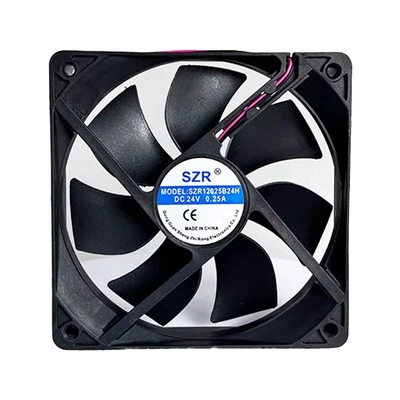
If you’re in the market for a high-speed fan that balances performance with user comfort, or if you have questions about which model would work best for your space (whether it’s a home office, a retail space, or an industrial worksite), feel free to reach out to our team to discuss your needs. We work with residential and commercial customers alike, and we’re always happy to help you find the right solution.
Industrial Cooling Fan References
- Berardesca, E., et al. (2019). Transepidermal water loss and skin barrier function. Journal of the European Academy of Dermatology and Venereology, 33(Suppl 2), 3-8.
- Randall, R. P. (2013). Fluid Mechanics for Engineers. CRC Press.
- Elias, P. M. (2005). The stratum corneum: form and function. Journal of Investigative Dermatology Symposium Proceedings, 10(3), 229-234.
- American Academy of Dermatology. (2022). How to protect skin from dry air and environmental factors. AAD.org.
- Raynor, P. C., et al. (2018). Air movement and human thermal comfort. Indoor Air, 28(6), 872-881.
Dongguan Shengzhirong Electronics Co., Ltd.
As one of the most professional high speed fan manufacturers and suppliers in China, our products have good reputation in the market. Please rest assured to wholesale high quality high speed fan made in China here from our factory. Customized orders are welcome.
Address: 6/F, Building 2, No.68, Shunxing 2nd Road, Dajingtou 2nd Industrial Zone, Dalang Town, Dongguan City, Guangdong, China
E-mail: szr_coolingfan@163.com
WebSite: https://www.szrfan.com/
